• Skip to main content
  • Skip to after header navigation
  • Skip to site footer

The Sourdough School Magazine

How to fix your relationship with bread by Dr Vanessa Kimbell

The Sourdough School Magazine

For in person courses, consultations and training in BALM visit The Sourdough School, or book a 1:1 meeting to get your bread personalised.

WhatsApp
[email protected]
Follow on Instagram

  • Facebook
  • Instagram
  • Pinterest
  • Twitter
  • WhatsApp
Book Your In Person Sourdough Course
Subscribe to our newsletter

.

  • About
    • Get in Touch
    • The School
    • Podcast on Apple
    • Podcast on Spotify
    • Dr Kimbell
    • What is Baking as Lifestyle Medicine?
    • Evidence Based
  • Courses
    • Online Diploma
    • Workshops
    • Baking Retreats
    • Personalised Bread Assessments
  • Baking
    • Recipes
    • Sourdough Ingredients
    • Books by Dr Kimbell
    • Sourdough Hydration Calculator
    • The Glossary
  • Bread & Health
    • Bread Health Calculator
    • Bread & Nutrition
    • Bread & Gut Health
    • Bread Matters
  • Flour
    • Flours from Farmers Directory
    • Add Farmer to the Directory
    • British Artisan Flour Mills by Region
  • Resources
    • Equipment advice pages
    • Sourdough Baking Equipment
    • Research papers
Professional Bakers: Certification In Baking As Lifestyle Medicine

Sourdough Hydration Calculator

22 October 2014 by Dr Vanessa Kimbell
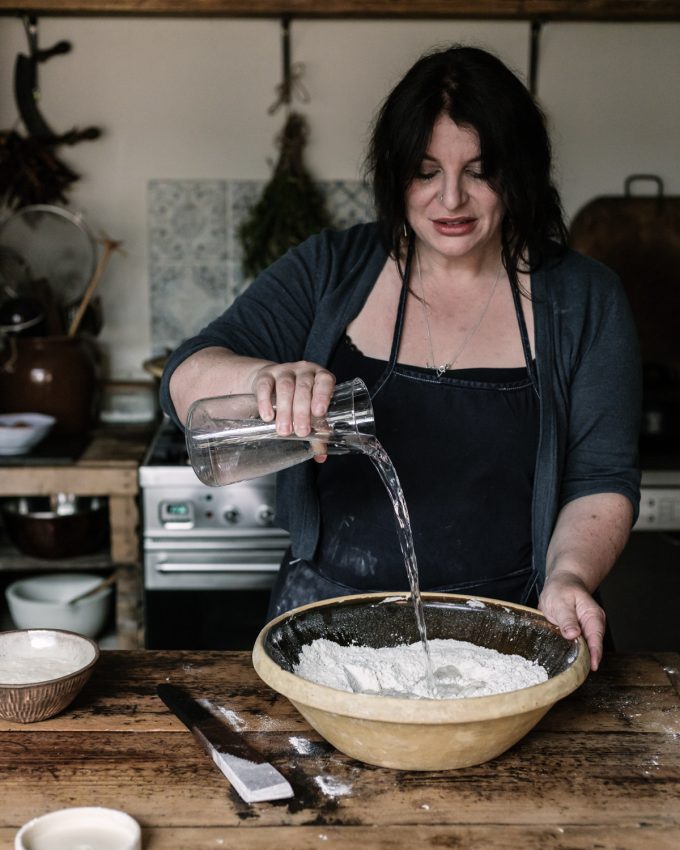
Teaching you to bake the healthiest bread in the world - Sourdough Hydration as bread Expert Vanessa Kimbell hydrates her bread pouring water onto flour in a bowl at the table
Dr Kimbell is considered to be one of the world’s leading experts in baking healthy bread

Dr Kimbell’s easy hydration calculation for sourdough bread.

When Vanessa teaches people at the Sourdough School to make the healthiest bread in the world, she often explains that hydration is key to getting the most out of flour. Part of the teaching is understanding how water impacts bread and fermentation.

What do we mean by sourdough hydration percentage?


Learn to Bake Sourdough In Person

Bakers refer to the flour weight as 100%, and water is a percentage of the total flour. A common misconception is that this sum is a percentage of the dough. It is the percentage of all water compared to all the flour.

The hardest part is that you will need to do some math first to enter the right numbers into this calculator!

  • For the flour, it is all the flour.  So add the flour in your starter/leaven + flour in the formula = TOTAL FLOUR
  • The water is the water in your starter/leaven + the water from the formula =  TOTAL WATER
  • (This easy to do when your starter is 100% hydration. ie there is the same about of water as there is flour)
First, add up all the flour in the formula. This is all the flour in the starter, the leaven and the recipe.
Next, add up all the water. Remember to include all the water in the starter, the leaven and the recipe.
Water / Flour * 100
Sending

For advanced bakers  – Sourdough Hydration

This calculator is for advanced bakers, and is useful if you start using a stiff starter or a higher hydration starter. The hydration impacts many factorsw hen it comes to your bread.

For this reason, we have developed 2nd advanced sourdough hydration calculators. The first one is a percentage calculator. Simply enter the total weight of flour (including any flour in your starter and/or leaven).
Then as you enter amounts for other ingredients such as salt and water the calculator will tell you the percentages. (Again don’t forget any water in your starter and/or leaven).

The second one is for converting recipes where a different hydration of starter is given to yours. Again we will use my sourdough bread recipe. This time we will assume that although the recipe uses starter at 100% hydration yours is actually 50%.

In this case we add the flour weight on its own, the water as given in the recipe, 300g and our starter, 100g. If we enter 50% hydration for the starter the calculator will work out for you that your total water is 325g, the total flour is 575g, and the hydration is 57%. We can now add water until we get to the required hydration of 63%, and see we need to adjust the recipe to add 339g of water.
Sending

Featured Products

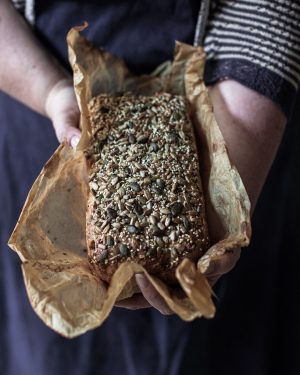
  • Seeded sourdough loaf

    Seeded Big Poops Loaf Recipe Box

    £6.99
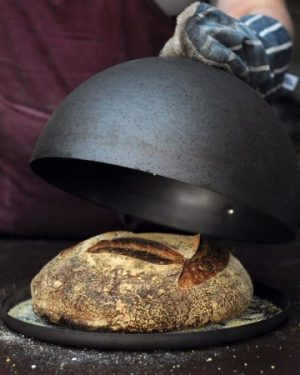
  • spun iron cloche

    Spun Iron Cloche

    £119.99
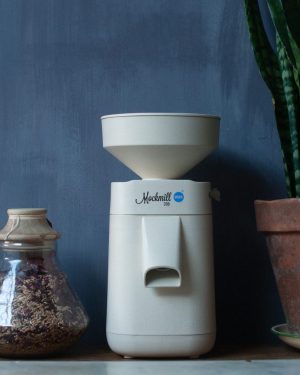
  • Mockmill 100 and 200 - Fresh milling at home

    Mockmill 100 / 200 Grain Mill (Free Grain)

    £224.16

All reasonable care is taken when writing about health aspects of bread, but the information it contains is not intended to take the place of treatment by a qualified medical practitioner. You must seek professional advice if you are in any doubt about any medical condition. Any application of the ideas and information contained on this website is at the reader's sole discretion and risk.

Learn more about…

The Sourdough
School
Attend a
Sourdough Retreat
Join Proven
Bread Classes
The Sourdough
School Diploma

Never miss a post

Enter your email address


About Dr Vanessa Kimbell

Dr Vanessa Kimbell is acknowledged as one of the world’s foremost authorities on bread and human health — the first person to hold a doctorate in Baking as Lifestyle Medicine and Preventative Healthcare, and the pioneer who, long before gut health became a mainstream concern, first identified the crucial role bread plays in the gut microbiome and mental wellbeing. A fourth-generation baker of Italian descent, she has been baking sourdough since the age of 11, served her traditional apprenticeship in the Dordogne, and is a time-served, French-trained qualified baker who has worked alongside some of the world’s greatest bakers including Richard Hart and Gabriele Bonci. She has spent four decades asking the questions the food industry preferred no one asked: why was industrial mono bread slowly harming us, and what would it take to make bread that genuinely nourishes?

The answer became her life’s work. As founder and Course Director of The Sourdough School in Northamptonshire — a world-renowned centre of research and education — she has taught bakers from over 84 countries, integrated the BALM (Baking as Lifestyle Medicine) Protocol into NHS clinical practice at Bethlem Royal Hospital, and developed Proven Bread: the first bread built on clinical evidence, personalised to the individual through nutrigenetics and gut microbiome assessment. She delivered the Royal College of General Practitioners‘ approved course in the Nutrition of Bread, has been a regular contributor to BBC Radio 4’s Food Programme for many years, and collaborates with leading scientists and clinicians including Professor Tim Spector — who credits her with teaching people to make the healthiest bread in the world — and Professor David Veale. Named the Sourdough Queen by The Telegraph in 2013, her influence reaches far beyond the classroom — from artisan bakers and healthcare professionals to the world’s leading food scientists and multinational food corporations.

A bestselling international author of five books, her sixth — Proven — publishes in November 2026.

More information about Vanessa can be found at
The Sourdough School,
The Sourdough Club,
on Instagram at @SourdoughClub,
@SourdoughSchool and
@vanessakimbell,
on Facebook and
LinkedIn.

Previous Post:1937 The London Master Bakers ExibitionJudging The Sourdough Category of The Tiptree World Bread Awards
Next Post:Sustainable SourdoughBaked Sourdough - Light and Dark

Reader Interactions

Comments

  1. Amy

    9 August 2022 at 8:16 pm

    Hello!
    I use Jovial Einkorn Flour for my starter, and I do not wish to have any more starters as I have many other starters that is not meant for bread. The jovial einkorn starter is what I think many refer to as a dry starter, and it does not have to fed so much as it is more dough than liquid. It remains on my counter or the fridge as I do not like a super sour bread as a Southern woman in America where we all like sweet things. LOL
    If made into a levain, it resembles a wet starter. I have fed it over 10 years now, and I would like to use it with many recipes outside of einkorn flour. To refresh, it is 20 grams of starter, 56 grams of all purpose einkorn and 100 grams of water. I have no idea what hydration percentage this is. Any chance you know? I would like to know if my starter can be adapted to your recipes. Probably with the hydration of my starter, I am aware I will have to adjust water and flour amounts. Just curious on your opinion before I buy your books. Thanks so much!

    Reply
    • Sophie Remer

      25 August 2022 at 1:37 am

      Hi Amy! Your sourdough starter hydration fed with those ratios would be about 178% hydration (this seems unrealistic given you’ve said that your starter is a dry starter — are you sure you wrote the correct measurements?). And most sourdough starters can be adjusted to suit a recipe, but it’s always a good idea to gradually adjust the ratios over a few feedings rather than just switching right away to avoid shocking your starter. Hope that helps!

      Reply
      • Amy

        13 September 2022 at 7:11 pm

        Hello!
        I checked the amounts, and they are accurate.
        https://jovialfoods.com/recipes/create-einkorn-sourdough-starter/
        This is the sourdough starter I have used, and I refresh it for a larger batch if you scroll to the bottom where the amounts are listed for that. People have described this as a dry starter as it resembles a ball of dough when you refresh it before it flattens out. Is this not correct?

        Also, knowing this, what would your recommendations be? I would prefer to be able to adapt my starter to your recipes rather than changing it, if possible. In the state it is in already, I do not have to feed it all the time. Thanks so much

        Reply
  2. hmyn

    7 March 2022 at 4:04 pm

    hi
    If there is a soaker in my dough, I add the weight of the dry grain & water ofthe soaker in the calcultion of hydration. Am I doing the correctly?
    thak you

    Reply
    • Sophie Remer

      9 March 2022 at 5:56 pm

      Yes, you’d need to include any water or flour incorporated.

      Reply
  3. Antonio Santiago

    6 January 2021 at 6:54 pm

    The second calculator is wrong, because if I add 830 flour, 550 water and 220 levan, the total dough weigh says, 1500 gm but in fact is 1600 gm. and don’t forget the salt. which should be 1.5% of the flour amount .

    Reply
  4. Martin

    18 October 2020 at 10:13 am

    I have a suspicion your 2nd calc is still incorrect. Maybe.
    I’ve entered 500g flour, 380g water and 120g of starter.
    Starter is 100% hydration (so 60g flour and 60g water.
    All good except, ‘total flour’ field is showing 620g.
    This isn’t possible if my starter only has 60g of flour.
    If I’m right the Total Flour should be 560g? (Being 500g dough mix + 60g from starter)
    Not sure if this skews your overall hydration calc or not.

    Reply
    • Vanessa Kimbell

      19 October 2020 at 7:58 am

      Thanks Martin – we will keep looking at it.

      Reply
    • Vanessa Kimbell

      23 October 2020 at 10:10 am

      Hello Martin, I have checked it again and the figures work for me – I get 560 using your figures. Always good to get feedback though so thank you for that.

      Reply
  5. Jacob Reach

    25 July 2020 at 7:26 pm

    Hi, I don’t think the second calculator is fixed. It says my 150 grams of starter has 20 grams worth of water and 130 grams worth of flour at 60% hydration starter. It seems it only works if I enter in 100 grams worth of starter.

    Reply
    • Vanessa Kimbell

      26 July 2020 at 6:39 am

      Thanks Jacob, we will go through it again and check.

      Reply
    • Vanessa Kimbell

      4 August 2020 at 3:09 pm

      Hello Jacob, I think it is fixed now!

      Reply
  6. Amir

    12 June 2020 at 7:07 pm

    Hi
    I need papers or references to know more about breads.
    I love to bake bread at home
    Sincerely
    Amir
    Chemist

    Reply
    • Sarah Smith

      19 June 2020 at 12:31 pm

      Hi Amir. We have a database of studies relating to sourdough, maybe some of the papers would be of interest to you. You can find it here – https://www.sourdough.co.uk/research/

      Reply
  7. Donald Evans

    6 June 2020 at 9:13 pm

    I’m struggling with your calculation of the flour and water content of your 50% hydration starter for the second calculator.

    Surely 100 grams of 50% starter contains 67 grams of flour and 33 grams of water and not the 75/25 that you specify which is a 33% hydration

    Please forgive me if I an wrong

    Reply
    • Vanessa Kimbell

      19 June 2020 at 4:52 pm

      Hi Donald and thank you for pointing this out. I will get someone to fix this. Vx

      Reply
    • Vanessa Kimbell

      24 June 2020 at 8:09 am

      I think the second calculator is now fixed! Thank you for pointing it out.

      Reply
  8. R Purtcher-Wyde

    5 May 2020 at 9:13 am

    There seems to be an issue with the calculator, if you add ONLY starter (200g) and set a hydration of 100%, the “total flour” comes up at 175g and total water at 25g.

    Reply
    • Vanessa Kimbell

      19 June 2020 at 4:53 pm

      Hi Ralph, many thanks for pointing this out. I will get someone to fix this. Vx

      Reply
      • Vanessa Kimbell

        24 June 2020 at 8:08 am

        The second calculator is now fixed! Thank you for pointing it out.

        Reply

Leave a Reply Cancel reply

Your email address will not be published. Required fields are marked *


Todays live for diploma students will be on 'How t Todays live for diploma students will be on 'How to engage your patient in the lifestyle changes of the BALM' with @vanessakimbell 

In their 6pm live session, we help keep our students on track with the syllabus and discuss the application of Baking As Lifestyle Medicine to the 6 pillars of Lifestyle medicine, applying the research papers, application of the Research, and how this ties into prescribing, along with guest lecturers, discussions and sharing knowledge.

#lifestylemedicine #health #functionalmedicine #nutrition #integrativemedicine #healthylifestyle #wellness #lifestyle #rcgp #dietitian #nutritionist #healthcareprofessional #holistichealth #healthyliving #plantbased #guthealth #naturopathicmedicine #selfcare #functionalnutrition  #naturopathicdoctor #foodasmedicine #foodismedicine #lifestylegoals #cpd #lifestylechange #mentalhealth #sourdough #sourdoughschool #bakeforhealth
BAKE, ANALYSE, EAT; RECALIBRATE & REPEAT. 📆 The S BAKE, ANALYSE, EAT; RECALIBRATE & REPEAT.

📆 The Sourdough School Clinic - Thursdays 8pm - for students of The Sourdough School 

✏️ In this weekly live session, we cover technical baking questions. Students can submit their Baking Record Sheets in advance of the session.

📋 We look at the details of our student's bakes - the specifics of the flour, timings and temperatures. Using our sourdough record sheets Vanessa will make suggestions on how they might modify, or recalibrate the next time they bake.

Follow the link in the bio to learn more about becoming a student at The Sourdough School 👆

#sourdough #sourdoughschool #bread #sourdoughlove #sourdoughlover #naturalleavened #leavening #levain #realbread #breadmaking #bakebread #makebread #makerealbread #learntobakebread #breadmakingclass #sourdoughstories #bakingforlove #bakingtherapy #sourdoughbaking
IBS AWARENESS MONTH Do you suffer from irritable IBS AWARENESS MONTH

Do you suffer from irritable bowel syndrome (IBS)? It can be tough to deal with the uncomfortable symptoms of stomach cramps, constipation, diarrhoea and bloating. But did you know that making dietary changes, such as incorporating sourdough bread into your diet, could help alleviate some of those symptoms?

Studies have shown that sourdough's long, slow fermentation process can reduce IBS symptoms. Plus, during #ibsawarenessmonth, we're exploring how adding different herbs and spices to your sourdough can further improve both the flavour and the digestion of your bread.

Let's talk about gut health, fermentation, and how sourdough can be a delicious and healthy addition to your diet. Join the conversation and share your experiences with IBS and sourdough.

#guthealth #healyourgut #healthygut #guthealing #guthealthmatters #letfoodbethymedicine #foodasmedicine #gutbrainconnection #nutrientdense #micronutrients #digestivehealth #nutritionfacts #microbiome #breadandguts #ibsawarenessmonth
THE SOURDOUGH SCHOOL – HAND CARVED WOODEN LAME On THE SOURDOUGH SCHOOL – HAND CARVED WOODEN LAME

One of the biggest issues around using a plastic lame to score sourdough, of course, is that eventually the blade will become blunt and the lame could end up in landfill.  So several years ago I talked to my dear friend EJ about developing a lame with a replaceable blade. And he came up with this very beautiful hand carved wooden lame.

Very sadly EJ is no longer with us. Recently a friend of EJ’s who is also a wood turner and carver offered to make these again for us in remembrance of our dear friend.

Follow the link in the bio to our shop where you can find our full selection of wooden sourdough tools 👆

#sourdough #sourdoughschool #bread #sourdoughlove #sourdoughlover #naturalleavened #leavening #levain #realbread #breadmaking #bakebread #makebread #makerealbread #learntobakebread #breadmakingclass #sourdoughstories #bakingforlove #bakingtherapy #sourdoughbaking
The Baking As Lifestyle Medicine (BALM) Protocol The Baking As Lifestyle Medicine (BALM) Protocol

The current food system is broken at multiple levels, from the pesticides used in our soils to the emulsifiers and additives adulterating industrially-processed foods. Nowhere is this more apparent than in the bread we eat.  The figures reported by the UK Flour Millers say that bread is bought by a staggering “99.8% of British households” and that “the equivalent of nearly 11 million loaves are sold each day. Approximately 60-70% of the bread we eat is white and sandwiches are thought to account for 50% of overall bread consumption. Average bread purchases are the equivalent of 60.3 loaves per person per year.” 

Most bread sold is made by modern processing methods that strip heart-healthy whole grains of their nutrient contents, resulting in low-fibre bread with a high glycemic index. Over time, white processed bread can increase a person’s risk of insulin resistance alongside other lifestyle diseases.

We’re on a mission to revolutionise the bread making process at every level – from soil to slice. The rules governing this are laid out in our Baking As Lifestyle Medicine protocol. 

#lifestylemedicine #health #functionalmedicine #nutrition #integrativemedicine #healthylifestyle #wellness #lifestyle #rcgp #dietitian #nutritionist #healthcareprofessional #holistichealth #healthyliving #plantbased #guthealth #naturopathicmedicine #selfcare #functionalnutrition  #naturopathicdoctor #foodasmedicine #foodismedicine #lifestylegoals #cpd #lifestylechange #mentalhealth #sourdough #sourdoughschool #bakeforhealth
Follow on Instagram

About

Email: [email protected]
Tel: +44 (0)7813308301

The Sourdough School Ltd
Registered in England & Wales: 08412236

Terms & Conditions

Privacy Policy

  • Facebook
  • Instagram
  • Pinterest
  • Twitter

Latest Posts

Glyphosate in Oats: Why Organic Matters more for some than others

What is the difference between Ambient and Retarded Sourdough?

Why You Feel Better Eating Bread on Holiday (And How to Fix It at Home)

What is Sourdough? The Complete Guide to Real Sourdough Bread

The Classic Diversity Sourdough Baguettes – Ambient

BANT Member
Lifecode GX

Subscribe

Enter your email address

Search


Terms & Conditions | Competition Terms & Conditions | Privacy Policy
Copyright © 2009–2026 Vanessa Kimbell | Login
Registered in England and Wales: 08412236
Website by Callia Web