 Sourdough Baguettes
Baguettes are hard to get right. But you won't just woke up one morning being good at them you're to have to practice if you want them like mine.
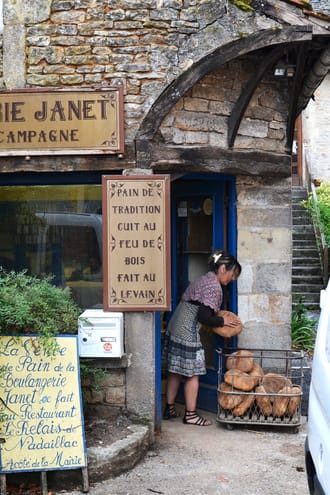
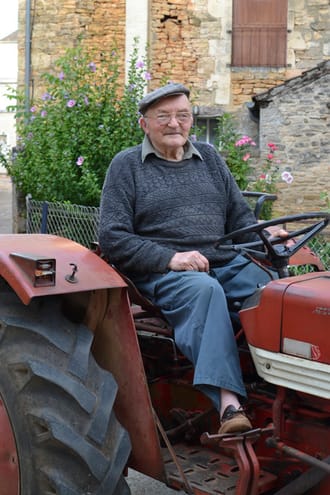
Quintessentially French, I grew up eating sourdough baguettes. Morris was one of the customers I served age 11, onwards. He spoke patois and he'd eat his bread with the wine he'd trodden with is feet, and the fresh cows chase made with milk from his own herd of 4 cows - raw milk. As he got into his 80's he would fetch his bread on his tractor, refusing to use a mobility aid, he'd drive his T20 to the bakery instead and wait until someone brought his bread out to him.
Perfectly fermented, and with light, airy holes, they are heavenly when freshly baked. The ideal sourdough baguette has a caramelised, golden crust, which, when you pull it apart, reveals a soft, open, tender interior that is ideal for French-style open sandwiches. Sourdough baguettes are also one of the most challenging breads to make. I recommend that you master the classic loaves before attempting sourdough baguettes. Honestly, I am not kidding when I say that baguettes are challenging. I've suggested 2 different hydrations, according to your skill level. Please do not attempt the higher hydration unless you really are an advanced baker, or it will be too challenging to shape, and will ruin your confidence before you develop the skills needed to handle the dough.
A word about flour. Most modern baguettes — even in France — are made with white flour, and a great many commercial ones contain emulsifiers that interfere with the gut microbiome and undermine the very benefits that long fermentation works so hard to create. I personally prefer to use stoneground wholegrain flour. It increases the diversity score of the bread, feeds a broader range of gut bacteria, and allows the fermentation to work at its most powerful. France produces some of the finest milling in the world, and I spent a great deal of time there visiting bakeries. It was through those visits that I first encountered Foricher, a French mill whose flour I was so taken with that I approached them directly, put them in contact with British distributors, persuaded them to produce 1kg bags for home bakers, and introduced them to Richard Hart. Their flour is exceptional, and it is what I use here.
Here is my sourdough baguette advice:
- Make sure you always use a long (2–3 hour) autolyse and keep your fridge temperature at 5°C.
- When your dough is fermented and it is time to shape, you will need to both shape and pre-shape lightly. It is worth studying the shaping technique in the video below before you begin.
- Creating steam in the oven helps with the oven spring. Place a tray full of water in the oven while it is preheating.
- When it comes to scoring, cut deeply and confidently. In part, the tension you create when shaping will determine how well the baguettes score.
- Don't forget that Eau de Bassinage is put in after the mix, just after you have worked the gluten.
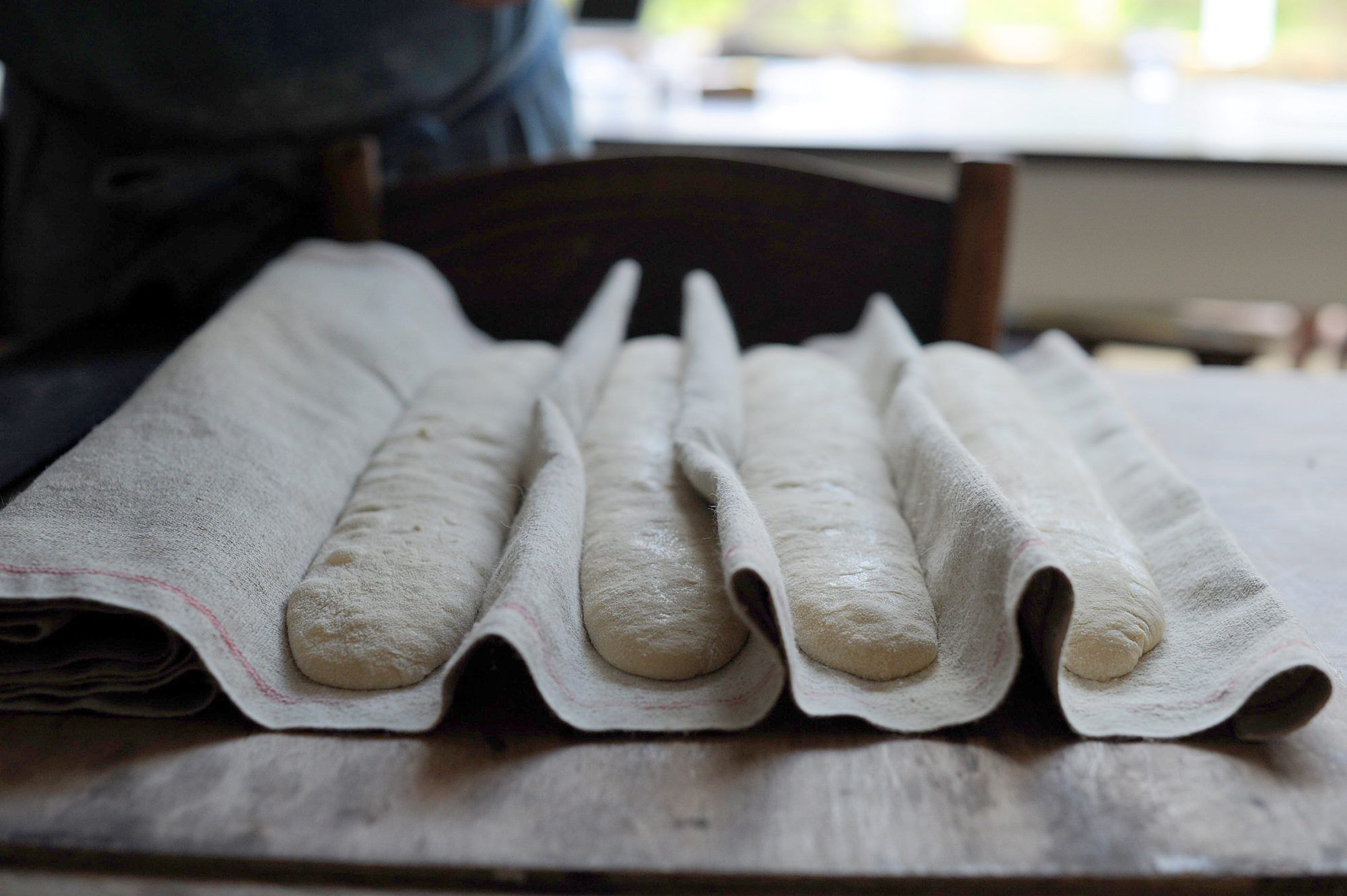
- You will need a couche or heavy linen tea towel dusted with flour for the final prove. Alternatively, if you are new to baguettes, you can use a baguette tray.
- Do measure your oven before shaping the baguettes – your oven might be smaller than the one I have here and you may need to adjust the size of your baguettes to fit.
Please do not be discouraged by the challenge of shaping baguettes. In the video, Adam Pagor — who owns Grain & Hearth bakery in Whitstable — makes this look very easy. Let me tell you, it is not. Professional bakers can shape 100 baguettes a day. That is 500 a week, 2,000 a month, and 24,000 baguettes a year. If this is your first baguette, please celebrate your attempt with humour, accept that it might look like a toddler shaped it, and renew your appreciation for the craftsmanship of bakers!
Getting baguettes into the oven is a little bit tricky; I use a flipping board. If you don't have one, you could use a piece of very sturdy cardboard. It needs to be about 14–15 cm wide and as long as your oven (mine is longer, as I have a Rofco oven).
Gently place the board along the length of the baguette, just touching the couche. Take the couche and flip the baguette very gently on to the board. Now position the board about 13 cm to the right of where the baguette needs to be on the baking tray or stone, and gently flip it left to place the baguette in the right position – it almost won't know it has been moved! Take great care to avoid disturbing the dough as you move it. This move is so gentle, it reminds me of moving my babies when they were sleeping.
Remember that, by using Botanical Blend No. 2 and stoneground wholegrain flour, you are increasing the diversity score of this bread significantly. The long fermentation process also breaks down the phytic acid in the wholegrain flour, making minerals more bioavailable, and produces the short-chain fatty acids that feed the gut lining and support a healthy microbiome. To take things even further, I highly recommend that you eat this with cultured butter to increase your levels of probiotics.
Starter: White double-refreshed
Makes 4 x 500g fat baguettes > Hydration 73%
DDT: 27
Flours
- Marriage's organic (13% protein) white roller-milled
- Botanical Blend Flour No 2
For The Leaven
- 25g white bubbly, lively sourdough starter (from 2nd build)
- 100g strong white bread flour
- 90g water at 26°C
For The Dough
- 800g strong white flour
- 200g Blend No 2 OR a stoneground wholegrain flour
- 5g diastatic malt powder (optional - please only add this to your flour if you are using a slow flour such as a Canadian white bread flour with roller mixed wholegrain)
- 735g water ( for beginners) 785g for advanced bakers
- 215g leaven (see above)
- 20g fine sea salt
Bake Temp
preheat oven to 230C then drop to 200C
Bake Time
30–40 minutes depending on how thick and long you make them
Equipment
- Medium bowl for mixing leaven
- Clean tea towel or wax cloth
- Large mixing bowl
- Lame
- A dough scraper is very useful
- A baking stone or a tray
- Couche or a robust, heavy cotton tea towel.
- Flipping board
Tutorials
| Refresh starter – first build | Day 1, 11pm |
| Refresh starter – second build | Day 2, 11am |
| Download sourdough schedule and plan your bake | Day 2, 9pm |
| Make the leaven, cover & leave overnight | Day 2, 10–11pm |
| Mix the flour, 700g of the water & the leaven into dough | Day 3, 8am |
| Autolyse with leaven for an hour | Day 3, 8.15am |
| Bassinage – Stretch and fold and add the remaining water incrementally ( remember this is more if you are an advanced baker) | day 3 9.15am |
| Last stretch and fold. | Day 3, 11am |
| Add salt mix in well & start bulk | Day 3, 11am–2pm |
| Bulk ends – Now shape your dough | Day 3, 2pm |
| Final prove | Day 3, 2.30pm |
| Getting baguettes into the oven is a little bit tricky; I use a flipping board. If you don't have one, you could use a piece of very sturdy cardboard. It needs to be about 14–15 cm wide and as long as your oven (mine is longer, as I have a Rofco oven). Then score 3 times diagonally | Day 3, 4.30–6pm |
| Preheat oven to 230°C/450°F. Drop down to 200°C/400°F to bake. Add a tray of water to the oven to create steam as the baguettes go in. Bake. | Day 3, 6pm |
| Analyse & Recalibrate | On eating |


 Richard Hart Baker: The Man Behind the Mexico Bread Controversy
Hello Vanessa!
I in the sourdough school book in page 181 that i can make the baguettes with both retarded and ambient method!
I want to make them using the retarded method but in the book again in page 181 you said that once the bulk fermantation has finished you need to cover the dough with a damp cloth and leave overnight in the fridge and then you say bake them around 10 to 10.30.
When should i shape them in a baguette and leave them to ferment?
Thank you!
Hi Hermione. You can see more about using the retarded method for the baguette in the “Advice” column on page 177. For the retarded baguette, you would pop the bowl of dough in the fridge overnight, and then shape them in the morning, giving them a final ambient rise for about 1 1/2 hours.
Thank you very much.
Hello all, can you tell me if you heat up the oblong cloche first before you transfer the loaf from the couche please?
Many thanks,
Sue
Hi! Would you be able to retard the dough overnight after the bulk ends? Then shape and proof the following morning? I’m also struggling with scoring warm ambient dough! Do you have any suggestions? Thank you!
Hi – here are some tips: https://thesourdoughclub.com/my-top-tips-to-bake-great-baguettes/ but it does take a lot of practice. We know this recipe works and sorry we don’t have a retarded baguette recipe up yet. With your scoring ambient doug you can always put the ambient dough in the fridge for about 20-30 minutes before scopring and baking.
Question for you, it says only use malt if using Canadian flour… at least thats how my brain is reading it. So in Canada with me buying the flour in canada does that mean I should be sure to get and use malt?
Hi Caroline,
It’s really about enzymes.
Flour contains a very small amount of sugar, about 1 -2 % which is not enough to make dough rise, but the starch in flour is the source of the most of the sugar for fermentation. Starch is a more stable way for a plant to store energy so to be used to feed an emerging plant must be broken down into sugar .. and it is this breakdown and availability of simple sugars that helps sourdough to ferment.
This breakdown is the work of enzymes. In certain wholegrain flour, there are enough enzymes to do this. Often this is related to the maritime environment. Fog, and damp weather is a great place for enzymes to be in the grain. in my experience the Canadian flours are grown in dry conditions, no prairies and the flour has low enzymes. so the malt give the flour a boost too then get the bacteria going .. as they make their own ..
So .. sometimes the mill will add amalayse and you don’t need to and sometimes you find that the mill doesn’t so your ferment is slow. Look in the side of the bag to see, although it not always clear and then experiment.
Kind regards
Vanessa
The recipe says 225g leaven but the leaven mix total is only 215g? Should it be 100g water, as well as flour in leaven or only 215g leaven in final recipe?
And if I want to start these the day before, would I shape and then skip the final prove and put them straight into fridge to bake from cold in the morning?
Thanks
hi – fixed this. Now says 215 on both. thank you for spotting this.
Hi Carrie – sorry but I did mention in the newsletter that it would be later in the year before I do the retarded ones – please bear with me as I can only manageed one huge tutorial at a time!
Vx