Could Your Genetics Make Glyphosate in Oats a Bigger Problem Than You Think?
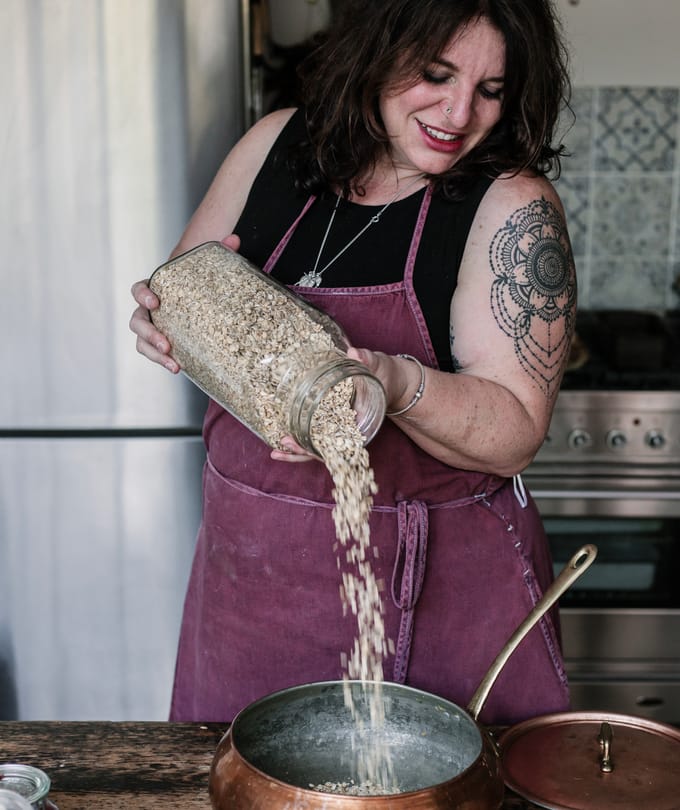
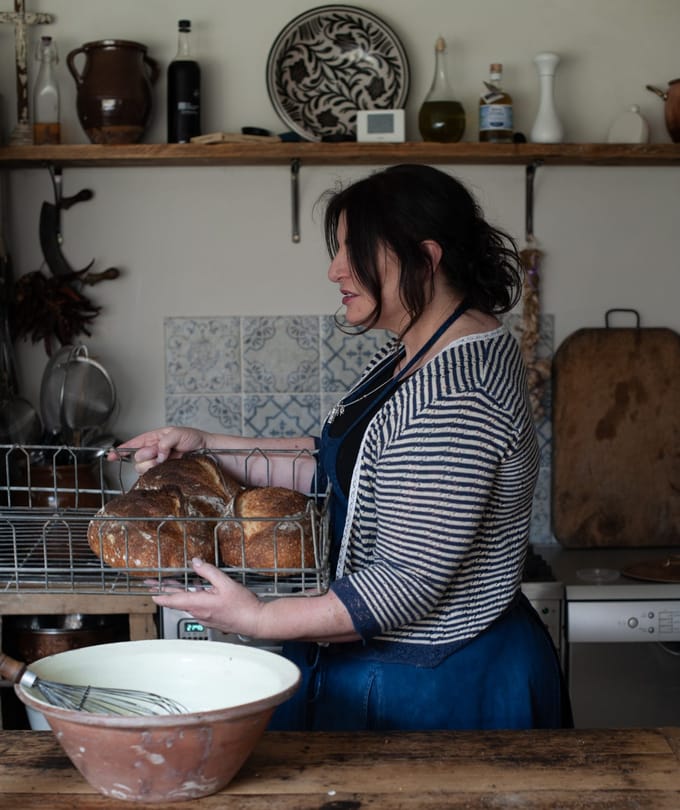
If I had to pin my work to one bread it would be a porridge bread. A long, slow fermented diversity bread, with an unctuous, open, sticky, irresistible crumb and that amazing marshmallow texture. It is a signature of mine, and it is loaded with nourishment on every level. My porridges are always built around diversity, but at the core of them is either oats or barley.
Bread is a fibre delivery system. It is the way I first describe bread to my students, and I always pause for a moment to let that sink in. What I want in that moment is for them to reframe almost everything they think they understand about bread. I use porridge in my bread for multiple reasons — for texture, for diversity, for shelf life — but the most important is the fibre that feeds your gut microbes, and the beta glucans that come with it.
I also specify that your porridge must be organic. I remember this landing twenty years ago as elitist, and I appreciate that organic is more expensive. Once you begin to look at your bread through the lens of fibre nourishment, though, you start to see that the way in which your oats are grown and handled is central to the level of nourishment in your bread.
There are always people who dismiss organic, and there is always an argument for cheap, affordable food. One of the most peculiar pricing anomalies right now is that you can find oats online that are organic selling for less than conventional oats. That anomaly is worth exploring, because it cuts straight through the most common defence of conventionally grown food — which is that organic is a luxury most people simply cannot afford.
Walk into a high-street supermarket and compare the porridge oats sold under a familiar branded box against the organic equivalent on the next shelf along, and you will usually find a price gap that makes the organic look like the premium choice. Move online, however — to Suma, to Buy Whole Foods Online, to Hodmedod’s, to the direct wholefood suppliers selling sacks of grain rather than printed packets — and the picture changes completely. There you can find organic oats, grown without glyphosate, costing the same as or less than conventional oats sold under a brand name in a colourful box. The premium is paying for packaging, shelf space, marketing and the supermarket margin. The farming itself has very little to do with it.
This matters because it changes the conversation about access. When someone tells me they cannot afford to buy organic flour or organic oats for their family, I take that seriously, and there are situations where it is genuinely the case. For a great many people, though, the obstacle is habit, and shelf placement, and the way we have been taught to associate the supermarket with affordability and the wholefood shop with luxury. Source your staples — oats, flour, pulses, beans — directly from the wholefood suppliers, and you are usually paying less per kilo than you would for the equivalent in a branded supermarket box, and you are getting a grain that hasn’t been desiccated with glyphosate before harvest.
Why Organic Oats Matter More for Some People (Especially If You Have This Common Gene Variant)
This brings me neatly to the crux of why I am writing this. When something is eaten every single day, this small shift in sourcing has a disproportionate effect. Oats for breakfast and bread at lunch, day after day, year after year, means the cumulative load of what those grains were grown with — or weren’t grown with — adds up across decades. For some of us, that cumulative effect has far more impact than for others. And for around half of you reading this, I want to introduce you to one of the most common genetic variants in the human population. GSTM1 is part of a family of enzymes responsible for a process called glutathione conjugation — essentially, it tags harmful compounds so the body can recognise and remove them. It is one of the key tools your liver uses in what is known as phase II detoxification: the stage where reactive or toxic molecules are neutralised and prepared for excretion.
I had been baking bread for decades without the tools to really explain many of the health outcomes of good bread. The two things that gave me those tools, and arrived together, were nutrigenetics and the gut microbiome. It was when I began seriously understanding the gut, and using nutrigenetics for targeted nourishment, that I started looking at how the way our ingredients are grown affects individual people differently. It was then that I realised there was so much more to genuinely healthy bread than the instruction to eat more fibre. If you are eating bread two or three times a day, every day, and that bread is made from conventionally grown wholegrain flour that carries glyphosate residues in its outer layers, then you are adding a small but consistent chemical load to your system with every single meal. Not a dramatic, acute exposure — a steady, cumulative one that starts with your toast in the morning.
Depending on the population studied, somewhere between 40% and 60% of people carry the GSTM1 null deletion — which means roughly half of you may be in exactly the same position as me, and simply not know it yet. So I look at bread through a nutrigentic lens. I don’t just teach bread making. I ask that my students consider the interaction between its components and their individual biology and how this relates to their bread consistently, over years and decades. So they understand the cumulative effect of that, good or bad, bread eaten every day is far greater than almost any other food. So this is particularly relevant when it comes to glyphosate how we approach oats and flour, fermentation, and how that impacts the way I look at our ingredients at The Sourdough School.
In 2015, the International Agency for Research on Cancer — the cancer research arm of the World Health Organization — classified glyphosate as Group 2A, probably carcinogenic to humans. That classification rested on limited evidence in humans, sufficient evidence in experimental animals, and strong evidence of genotoxicity. The human signal was strongest for non-Hodgkin lymphoma in farmers and agricultural workers who had been occupationally exposed over many years.
That classification has been contested. The European Food Safety Authority, the US Environmental Protection Agency, and the joint FAO–WHO panel on pesticide residues have all reviewed the same body of evidence and concluded that glyphosate is unlikely to pose a carcinogenic risk at typical dietary exposures. On that basis, the European Commission renewed glyphosate’s approval for another ten years in 2023, and in the United Kingdom it remains authorised, including for pre-harvest use on cereal crops such as wheat and oats. At the level of regulators and dietary residues, the picture is genuinely contested. What none of this resolves is the question that matters most for someone eating bread every day. The answers on cumulative dietary load are not backed by randomised controlled trials, because that research simply hasn’t been done — and probably cannot be done. You cannot randomise human beings to eat residue-laden bread for half a century. So the question sits in a gap between the regulators, who say there is no evidence of harm at the doses we are exposed to, and the courts, which have been awarding billions to people whose juries have found their cancers were caused by the chemical.
Bread, however, is eaten every day, often multiple times a day, by a huge proportion of the population. It is a staple — meaning that any interaction between its components and your individual biology is happening repeatedly, consistently, over years and decades. The cumulative effect of that, good or bad, is far greater than almost any other food. And for someone with a GSTM1 null variant, processing those residues through a clearance system that is already missing one of its key tools, the gap I have just described is not a comfortable place to sit.
Nowadays I work with individuals over much longer periods of time, teaching baking as preventative health and they work through the Proven Bread Programme. But before I go any further, I want to give you a little more context — how and why glyphosate choices and grain particularly matter when it comes to bread, and why it matters so differently from one person to the next.
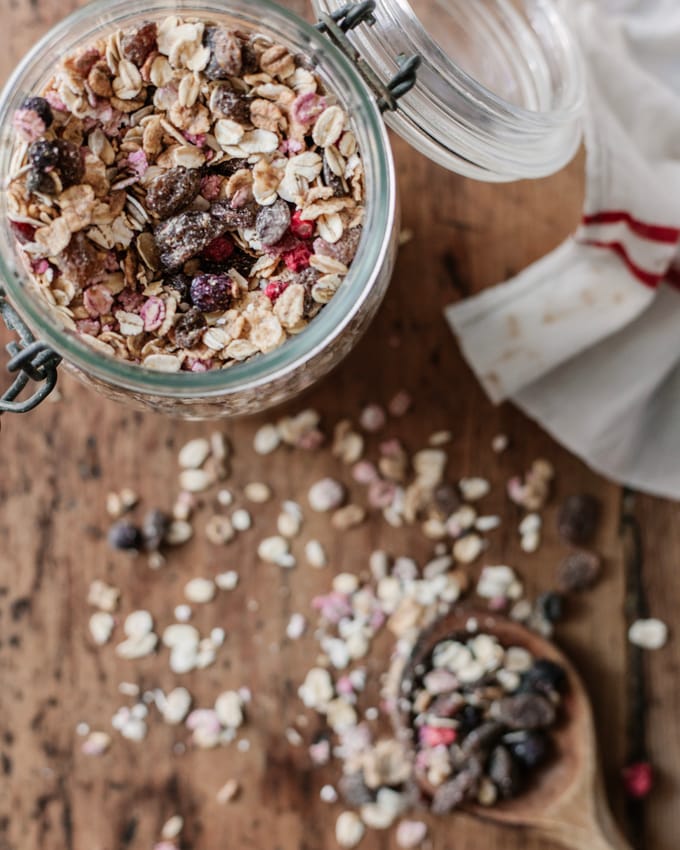
The Surprising Way Glyphosate Ends Up in Your Oats (And Why It Lingers)
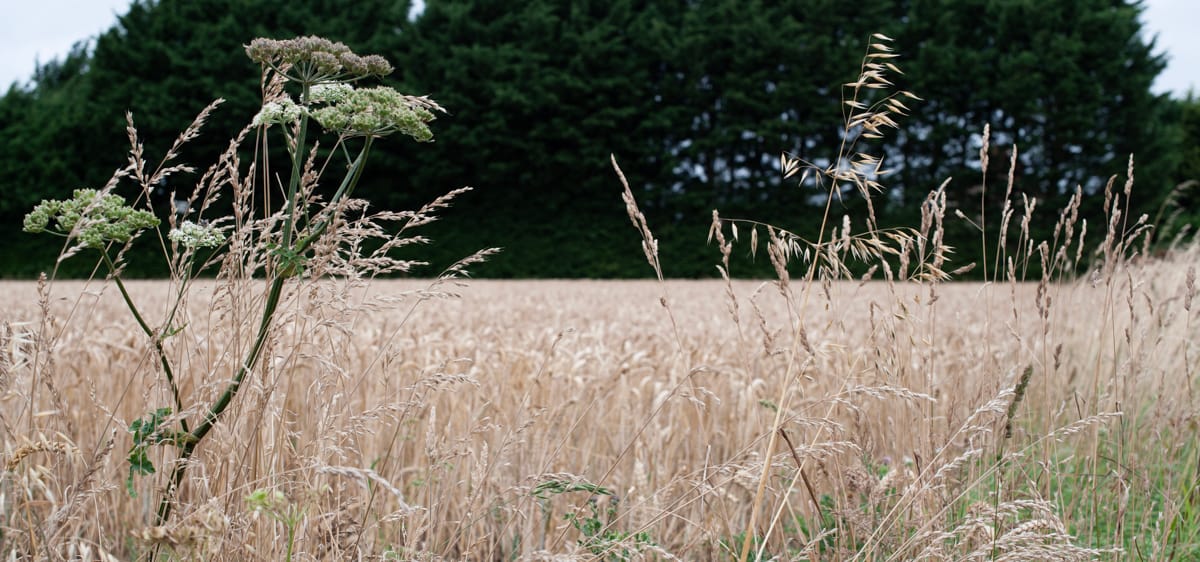
What I have noticed over the years from discussions with my students is that they assume that pesticides are applied during the growing season and that by harvest time, the crop is clean. The reality is less comfortable. In the UK, glyphosate is routinely sprayed directly onto wheat and oat crops in the weeks immediately before harvest, not to kill weeds, but to kill the crop itself.
The practice is called desiccation: by chemically accelerating the dying of the plant, farmers can harvest up to two weeks earlier, standardise the drying of the grain, and improve the consistency of their yields. It is an industrial convenience and oats consistently show higher glyphosate residues than wheat, barley or any of the other common cereal grains, and this is true across every major testing programme of the last decade. The Canadian Food Inspection Agency’s retail survey, for example published in the Journal of Agricultural and Food Chemistry, found the highest concentrations of any grain product in oat flour.
The US Environmental Working Group’s testing of breakfast cereals, the UK citizen-science studies of supermarket porridge oats, the Detox Project’s laboratory work — all of them have come back with the same picture: oats at the top of the list.The reason is partly a question of farming practice. Pre-harvest desiccation with glyphosate is more heavily used on oats than on most other cereals, because oats ripen unevenly and a spray a week or two before harvest dries the crop down for combining. It is partly a question of regulation: the maximum residue limit for oats in the European Union is set at twenty milligrams per kilogram, which is many times higher than the limit for most other foods. And the structure of the grain itself seems to play a part: the husk and bran hold onto the residue, and the rolling, flaking and milling processes used in oat products do not remove it.
This is why I have been so insistent, for so long, about sourcing organic oats. If you eat porridge in the morning and bread at lunch, and the oats in both come from a conventionally grown, glyphosate-desiccated supply, you are receiving — twice in a single day, every day — from the food category that consistently shows the highest residues of any grain on the shelf.
The UK’s own Agriculture and Horticulture Development Board acknowledges the practice and issues guidance on it. The Soil Association has campaigned against it. And yet it continues.

Why Oats are one of the most misunderstood foods in current nutrition conversation,
Oats matter specifically, because I think they are one of the most misunderstood foods in current nutrition conversation, and because they are remarkable for delivering beta-glucans that support cardiovascular health. Sadly most nutritional professionals judge their glycemic index on processed unfermented industrial oats, not on steel cut organic fermented oats, and the difference is remarkable. Fast oats will likely raise your blood sugar, but slow whole fermented oats will stabilise blood sugar balence and this moderate impact is even more effective if eaten cooled and eaten sequentially. It’s a classic case of half a story that is dramatic, and consequentially people miss out on really understanding the true nutritional value, and afordability of oats.
On a personal level, cardiovascular disease is part of my family history, and beta-glucans — the soluble fibre found in oats — are one of the most robustly evidenced dietary tools I have for managing that inherited risk. So oats aren’t optional for me. I bake with them, I ferment them, I eat them every single day. They’re not a nice addition to my diet — they’re structural.
My paternal grandfather had multiple heart attacks, and cardiovascular disease runs through my family. Porridge bread is one of the breads I make knowing it will have a meaningful impact on my own health — not just theoretically, but personally. For someone designing therapeutic bread systems, the interesting aspect of beta-glucans is that they act both directly and indirectly: directly through bile acid metabolism, and indirectly through microbiome fermentation. That dual mechanism is part of why they remain one of the most robust fibre interventions for cardiovascular disease risk reduction. Oats also deliver polyphenols, prebiotic fibres that feed the gut microbiome, and — when prepared correctly — a sustained, stable source of energy that supports rather than disrupts blood sugar balance.
That seemed like a straightforward case for glyphosate in oats why organic matters in oats. Until my nutrigenetics report showed me there was considerably more to it. I carry the GSTM1 null deletion, which means I do not produce that particular enzyme. My detoxification system is still functioning, but I have less capacity in one important pathway for handling oxidative stress and certain environmental toxicants. Several population studies show that people with GSTM1 deletion experience higher oxidative stress, inflammation, or DNA damage when exposed to environmental pollutants compared with individuals who carry the functional gene. The gene does not determine whether toxins enter the body but it does influences how efficiently the body neutralises their reactive intermediates.
Glyphosate specifically is somewhat different mechanistically. Humans excrete a large proportion of glyphosate unchanged in urine, and it is not primarily detoxified through GSTM1 conjugation. At this point you might be wondering whether GSTM1 is even relevant to glyphosate at all — and it is a fair question, because the connection is not straightforward. Glyphosate is not primarily detoxified through the GSTM1 pathway. Humans excrete a large proportion of it unchanged in urine. So on the face of it, whether or not you produce the GSTM1 enzyme might seem beside the point.
So oats are one of the best foods you can eat for cardiovascular health, AND they’re one of the most glyphosate-laden crops. The irony that the very food that should be protecting your heart is potentially straining the detoxification system that your genetics have already made less efficient. That’s the story. But the relevance is indirect, and it matters. Experimental and epidemiological work suggests that glyphosate exposure can contribute to oxidative stress, mitochondrial disruption, and disturbance of the gut microbiome. These are not the same as direct chemical detoxification — they are downstream effects, stresses that the body then has to manage. And if your glutathione buffering capacity is already reduced because of the GSTM1 deletion, your physiological tolerance for those additional stresses may simply be lower. Your system has less spare capacity to absorb the disruption.
So the functional nutrition logic becomes straightforward: reduce the total toxic load so that the detoxification system is not constantly working at its limit. So So organic grain is one effective way to lower pesticide exposure, particularly when bread is eaten daily and in significant quantities.
That does not mean organic automatically makes bread “detoxifying,” and it does not mean non-organic bread is inherently harmful. What it does is reduce one category of environmental burden. Eaten several times a day, over lifetime and that reduction becomes meaningful.
Glyphosate in Oats: Why Organic Matters
Oats are one of the crops most heavily treated with glyphosate as a pre-harvest desiccant — sprayed directly onto the grain in the weeks before harvest. Residue levels in conventionally grown oats are consistently among the highest recorded in any cereal crop.
All the extraordinary nutritional benefits of whole oats are real. And yet oats drenched in herbicide residue are not, in my view, the same food. The gut microbiome we are trying to nourish with beta-glucan and prebiotic fibre is also the ecosystem most likely to be disrupted by repeated chemical exposure. That contradiction is not something I am willing to bake with, which is why I insist on organic oats — and why, for oats specifically, I recommend Hodmedod’s, a British company with serious credentials in growing and supplying organic, sustainably grown pulses and grains. The oat you eat matters. So does how it was grown.
What This Common Gene Means For You
Whilst common the GSTM1 null deletion is silent. There are no symptoms. You will not feel it, notice it, or have any reason to suspect it. Half the population carries it and most of people will never know. It is not a disease or a deficiency in the ordinary sense — it is simply a variation in how efficiently one detoxification pathway functions. But in a world where that pathway is being quietly called upon every day by the food levels of toxicity from chemicals on your plate, and I think this is a genetic particularly worth knowing about.
The first thing I recommend to anyone with this gene is to avoid agrochemicals wherever possible. The second is to increase the level of polyphenols in your bread every day. Bread, when it is baked with the intentional loading of polyphenols, is a powerful way to deliver the nutrients that support clearance through the other routes your body uses for the same job.
This is where Diversity Blend XXX Mixer comes in. It is the third of the blends developed and milled and sold by Hodmedod’s, and it is the blend that I formulated with polyphenol density specifically in mind. Inside the bag you will find a high polyphenols flour blended with black wheat and black barley — both rich in anthocyanins, the deep purple and red pigments that are some of the most studied polyphenols in human nutrition — alongside spelt, rye, emmer, lentils, peas, quinoa and poppy seeds. To those grains and pulses, nettle leaf for its plant polyphenols and chlorophyll, hibiscus flowers for their bright, rose-coloured anthocyanins, coffee for its chlorogenic acids, and cocoa husk for its flavanols. Every one of those ingredients carries a different family of polyphenols, and this supports the different community in your gut microbiome and in turn the polyphenols also support your body’s clearance pathways.
How to make a simple Porridge with XXX blend
You can drop Diversity Blend XXX Mixer into any sourdough recipe in your repertoire by replacing 30% of the existing flour with it. No special technique, no separate method — just swap a third of your usual flour for the blend and carry on as you would. I would highly recommend, though, that the dough is given a long, slow fermentation because the legumes really need to be broken down for ease of digestion. and sourdough fermentation does this. The polyphenols, the minerals and the fibres in the blend are mostly bound up in the bran, the seed coats and the pulse cell walls, and it is the slow work of the wild yeasts and lactic acid bacteria — given time, given temperature, given the patience of a proper overnight prove — that breaks those bonds and releases the nutrients in a form your gut can actually absorb. Given that fermentation, the same loaf becomes a far more bioavailable delivery of everything you have put into it.
One of the ways I use this in my own daily bread is to make a porridge with it. I take three tablespoons of the Diversity Blend XXX Mixer and three tablespoons of oats, cook them gently together with water until they soften into a thick, creamy porridge, and then fold the cooled porridge into my dough as part of the bread mix after I add salt. The grains and pulses in the blend are partly cooked by this point, the polyphenols from the hibiscus, coffee and cocoa husk are drawn out into the porridge, and the whole lot becomes part of the loaf — feeding the crumb with that unctuous, marshmallow texture I love, and feeding the gut with everything the blend was designed to deliver let me know how you get on with this method. It is simple, delicious and effective.
How to Find out if you have the GSTM1
If you want to find out whether you carry the deletion, that information is available through nutrigenetics testing. At The Sourdough School I work with Lifecode Gx, whose Nutrient Core panel includes GSTM1 alongside 112 other genes relevant to how your body processes food, manages inflammation, and responds to environmental exposures. If you would like to explore what your own results might mean for the bread you eat, personalised consultations are available. Understanding your genetics does not have to mean overhauling everything — sometimes it simply means making one or two well-informed choices that happen to matter quite a lot.
Parents reading this will already have done the mental arithmetic: if roughly half of adults carry the GSTM1 deletion, then roughly half of children do too. Children eat a great deal of bread relative to their body weight, and they eat it at a stage of development when the gut microbiome, the immune system, and the detoxification pathways are still maturing. I am not raising an alarm — but I do think it is a reason to take grain sourcing seriously from early on, rather than treating it as something to consider later.
Glyphosate is also not the only residue worth thinking about. It receives the most attention because it is the most widely applied herbicide in the world and because the pre-harvest desiccation practice means it ends up directly in the grain. But conventionally grown wheat can carry residues from a range of other pesticide active ingredients — the USDA survey cited earlier recorded eighty-seven in winter wheat alone. The GSTM1 pathway is relevant to a broader class of environmental toxicants, not glyphosate specifically. Choosing organic addresses the whole picture, not just one chemical.
And then there is the question of fermentation. Sourdough fermentation does not remove glyphosate residues from flour — I want to be clear about this as there has been some very odd claims recently on social media about that. But long, slow fermentation does support creation of resistant starch and I add in more fibre and diversity in my bread to support the gut microbiome in ways that build resilience: fermentation increases the bioavailability of minerals, reduces phytate levels, produces beneficial organic acids, and delivers postbiotic compounds that support the gut lining. A disrupted microbiome is one of the downstream effects associated with glyphosate exposure. Fermentation works in the opposite direction. It is not a remedy for what should not be in the flour in the first place, but it is a meaningful part of why the way bread is made matters as much as what it is made from.
If you want to test your own GSTM1 status and get personalised flour advice you can find out more about personalised consultations here. For those wishing to deepen their expertise: whether for personal health, professional practice, or teaching, our workshops and Diploma provide a rigorous foundation in regenerative grain systems and fermentation science.


Thank you for the excellent article on glyphosate and its effects on the body. I am in the US and most people have no idea their cereal grains are sprayed with glyphosate before harvest and that it remains on and with the grain even as it is processed into food. I was completely unaware of the gene information you presented and suspect I am struggling with it, just since the 1990’s when glyphosate use began in the US, though few people knew it at the time. I had no idea that oats were heavily tainted with glyphosate. You have given me more information to insist on organic flours but, I am concerned farmers here in the US may still be able to call their grain organic when they refrain from herbicide use while the grain is growing but can slip by on a technicality when they use it as a desiccant at the end of the plant’s life cycle. It pays to use trustworthy products but I am uncertain I have been. Is my concern excessive? Regardless, the article is quite helpful. And eye opening.
Hi Rachelle, thank you for your comment. It is near easy – but I just got off the phone from Henry. He grows the grains and mills the flour I use. There is nothing more powerful than finding your farmer of miler directly and chatting with them. Trust is built and it is a relationship – not a branding exercise. Try to find a real farmer – maybe my directory will help?
I’ve recently had to remove all high fibre foods from my diet including all the delicious whole grains that I usually bake sourdough with.
This will be a temporary measure whilst investigating which grains, legumes etc my gut is happy to eat. First time in my 64 years that I’ve had to adhere to a low residue diet for health reasons. I too have cardiovascular disease in my family and appreciate the goodness of organic oats.
Thank you for writing so eloquently about the glyphosates issues we all face and your life work of expertise and personal experience in all bread matters!
Hi Deborah,
You don’t say why but often people advise removal when there is a problem, but please be mindful whose ad use you follow. for example the a strict low FODMAP phase should usually last 2–6 weeks. Staying on it longer isn’t physiologically ideal; it tends to happen because symptoms return when foods are reintroduced, or because the underlying gut ecology hasn’t been repaired.
First, microbial imbalance (dysbiosis or SIBO-like patterns).
If someone has an overrepresentation of gas-producing organisms in the small intestine or proximal colon, reintroducing FODMAPs rapidly recreates bloating, pain, and altered motility. They interpret that as “I can’t tolerate these foods,” when in fact the ecosystem hasn’t been rebalanced yet. I suggest a slow rebuild but under supervisor of a qualified practitioner.
Second, loss of microbial diversity during restriction.
This is something I experienced first had as my microbiome was very depleted from staying on this for al long time.
Low FODMAP reduces substrates for key organisms like Bifidobacteria. Studies show measurable reductions in beneficial species during prolonged restriction. So paradoxically, the longer someone stays low FODMAP, the harder reintroduction can become because the microbes needed to process those fibres are no longer abundant.
Third, visceral hypersensitivity and gut–brain signalling.
In IBS-type physiology, the issue is not just gas production but how the nervous system perceives it. If the enteric nervous system is sensitised, even normal fermentation feels excessive. These individuals often remain on low FODMAP because it dampens sensory load, not because it fixes the underlying signalling.
A strict low FODMAP approach often removes fructans from wheat, yet long-fermented sourdough significantly reduces fructan content through microbial degradation. That’s why many people who “can’t tolerate bread” can tolerate properly fermented sourdough.
From a BALM perspective, the goal is not long-term restriction. It is:
– restore fermentation capacity
– rebuild microbial diversity
– reintroduce fibres in a structured way
– use fermentation (e.g. sourdough, pulses, soaked grains) to pre-digest FODMAPs rather than eliminate them
I hope this helps.
Kind regards
Vanessa