Introduction to Oats, Glyphosate and Nutrigenetics
Before I begin, I suspect what I’m about to share is relevant to around half of you reading this. I’m going to introduce you to one of the most common genetic variants in the human population. GSTM1 is part of a family of enzymes responsible for a process called glutathione conjugation — essentially, it tags harmful compounds so the body can recognise and remove them. It is one of the key tools your liver uses in what is known as phase II detoxification: the stage where reactive or toxic molecules are neutralised and prepared for excretion. Depending on the population studied, somewhere between 40% and 60% of people carry the GSTM1 null deletion — which means roughly half of you may be in exactly the same position as me, and simply not know it yet. So I look at bread through a nutrigentic lens and in this feature I want to discuss how glyphosate is used on grains how is central to health and why the way we approach flour, fermentation, and how that impacts the way I look at our ingredients at The Sourdough School.
I have been baking bread for forty-three years, and it was only when I began seriously understanding the gut, and using nutrigenetics for targeted nourishment, that I started looking at how the way our ingredients are grown affects individual people differently. It was then that I realised there was so much more to genuinely healthy bread than the instruction to eat more fibre. If you are eating bread two or three times a day, every day, and that bread is made from conventionally grown wholegrain flour that carries glyphosate residues in its outer layers, then you are adding a small but consistent chemical load to your system with every single meal. Not a dramatic acute exposure — but a steady, cumulative one tat starts with your toast in the morning.
There is a wealth of epidemiological evidence about both glyphosate and oasis out there, but a lot of the answers on cumulative load are backed by randomised controlled trials — that research simply hasn’t been done. Bread, however, is eaten every day, often multiple times a day, by a huge proportion of the population. It isn’t a supplement you take occasionally or a food you eat once a week — it’s a staple. That means any interaction between its components and your individual biology is happening repeatedly, consistently, over years and decades. So the cumulative effect of that, good or bad, is far greater than almost any other food.
Nowadays I work with individuals over much longer periods of time, teaching baking as preventative health and they work through the Proven Bread Programme. But before I go any further, I want to give you a little more context — how and why glyphosate choices and grain particularly matter when it comes to bread, and why it matters so differently from one person to the next. So this article discusses some of the facts that I consider, with my students genetics, and I add a large dose of careful, accumulated common sense — and increasingly, I have to say working with individuals creating very precise kind of personalisation of breads.
Why Glyphosate Matters
Most people who attend my courses assume that pesticides are applied during the growing season and that by harvest time, the crop is clean. The reality is less comfortable. In the UK, glyphosate is routinely sprayed directly onto wheat and oat crops in the weeks immediately before harvest, not to kill weeds, but to kill the crop itself.
The practice is called desiccation: by chemically accelerating the dying of the plant, farmers can harvest up to two weeks earlier, standardise the drying of the grain, and improve the consistency of their yields. It is an industrial convenience.
The UK’s own Agriculture and Horticulture Development Board acknowledges the practice and issues guidance on it. The Soil Association has campaigned against it. And yet it continues.

Globally, 9.5 million tons of glyphosate has been applied to agricultural land — enough to coat every cultivated acre on earth. In the most recent USDA Agricultural Chemical Use Survey on wheat, farmers across eighteen states used eighty-seven different pesticide active ingredients on winter wheat alone. Around 30% of US wheat acres are sprayed with glyphosate, while corn and soybean remain the primary crops for application. In the UK, glyphosate is routinely applied to over two-thirds of conventionally grown wheat, not only as a weedkiller during the growing season. Yet as a desiccant, sprayed directly onto the mature crop shortly before harvest to accelerate drying and standardise yields. The residue does not disappear. It is in the grain, milled into the flour and ends up in the bread.
The long-term health implications of regular dietary exposure to glyphosate residues are not yet fully understood — and that, in itself, is reason enough for caution. Bayer AG (which acquired Monsanto) announced it would stop selling glyphosate-based herbicides to consumers by 2023, following tens of thousands of lawsuits related to exposure and concerns about its association with certain cancers, as well as Parkinson’s, Alzheimer’s, and autism. A 2019 study found a 41% increased risk of non-Hodgkin lymphoma in those with high glyphosate exposure.
I am not going tell you that glyphosate in bread will make you ill. What I can tell you is that when I look at the evidence available and weigh it against the complete absence of evidence that eating it is safe along with my genetics means that I choose organic flour. Every time. especially when the residues concentrate in the outer grain layers, meaning wholegrain flour — the very thing we tell people to eat more of — carries higher residue levels than refined flour when crops have been treated.
The Oat Problem and Why it Matters
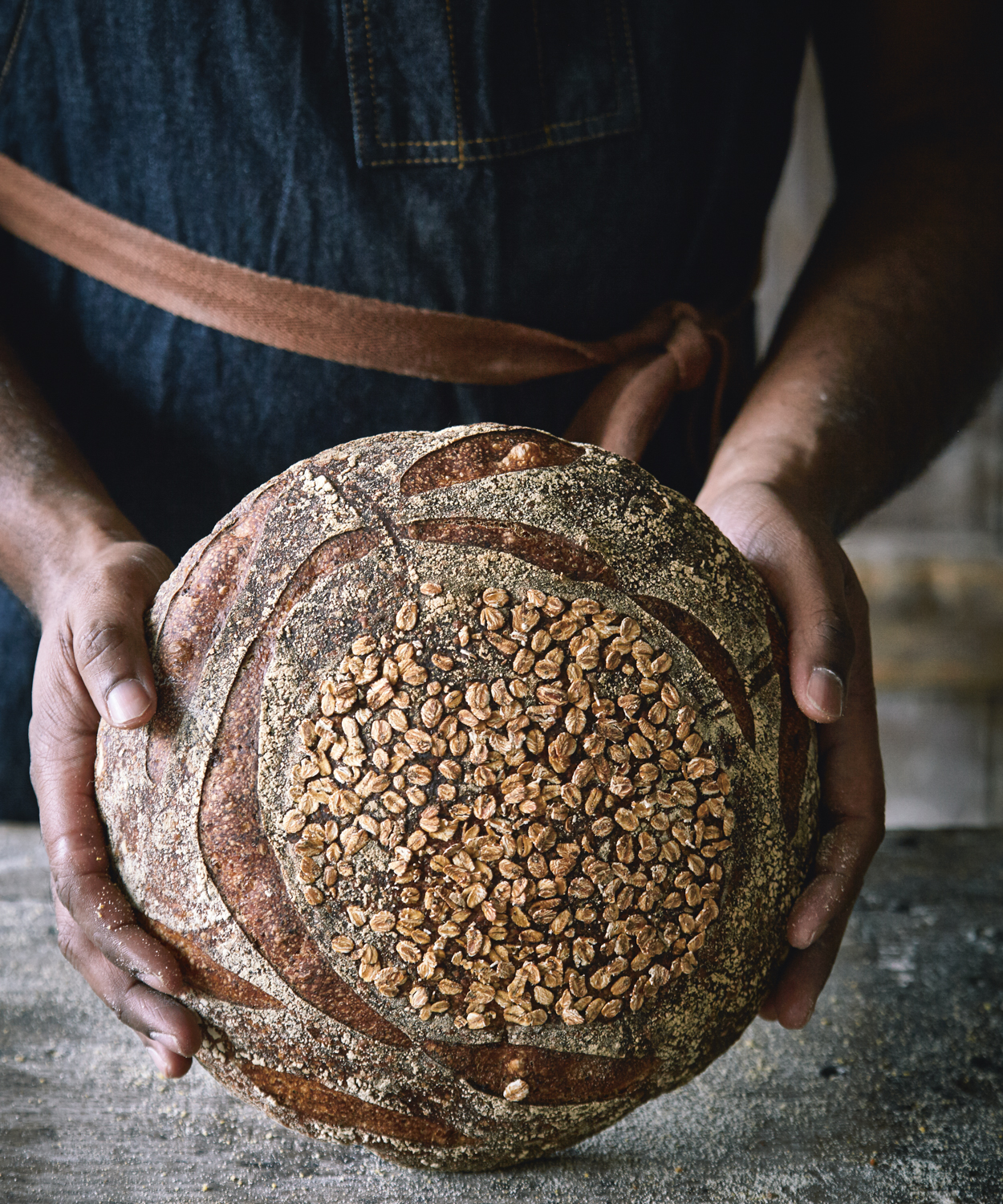
Oats matter specifically, because I think they are one of the most misunderstood foods in current nutrition conversation, and because they are remarkable for delivering beta-glucans that support cardiovascular health. Cardiovascular disease is part of my story, and beta-glucans — the soluble fibre found in oats — are one of the most robustly evidenced dietary tools I have for managing that inherited risk. So oats aren’t optional for me. I bake with them, I ferment them, I eat them every single day. They’re not a nice addition to my diet — they’re structural.
My grandfather had multiple heart attacks, and cardiovascular disease runs through my family. Porridge bread is one of the breads I make knowing it will have a meaningful impact on my own health — not just theoretically, but personally. For someone designing therapeutic bread systems, the interesting aspect of beta-glucans is that they act both directly and indirectly: directly through bile acid metabolism, and indirectly through microbiome fermentation. That dual mechanism is part of why they remain one of the most robust fibre interventions for cardiovascular disease risk reduction. Oats also deliver polyphenols, prebiotic fibres that feed the gut microbiome, and — when prepared correctly — a sustained, stable source of energy that supports rather than disrupts blood sugar balance.
That seemed like a straightforward case for oats. Until my nutrigenetics report showed me there was considerably more to it. I carry the GSTM1 null deletion, which means I do not produce that particular enzyme. My detoxification system is still functioning, but I have less capacity in one important pathway for handling oxidative stress and certain environmental toxicants. Several population studies show that people with GSTM1 deletion experience higher oxidative stress, inflammation, or DNA damage when exposed to environmental pollutants compared with individuals who carry the functional gene. The gene does not determine whether toxins enter the body but it does influences how efficiently the body neutralises their reactive intermediates.
Glyphosate specifically is somewhat different mechanistically. Humans excrete a large proportion of glyphosate unchanged in urine, and it is not primarily detoxified through GSTM1 conjugation. At this point you might be wondering whether GSTM1 is even relevant to glyphosate at all — and it is a fair question, because the connection is not straightforward. Glyphosate is not primarily detoxified through the GSTM1 pathway. Humans excrete a large proportion of it unchanged in urine. So on the face of it, whether or not you produce the GSTM1 enzyme might seem beside the point.
So oats are one of the best foods you can eat for cardiovascular health, AND they’re one of the most glyphosate-laden crops. The irony that the very food that should be protecting your heart is potentially straining the detoxification system that your genetics have already made less efficient. That’s the story. But the relevance is indirect, and it matters. Experimental and epidemiological work suggests that glyphosate exposure can contribute to oxidative stress, mitochondrial disruption, and disturbance of the gut microbiome. These are not the same as direct chemical detoxification — they are downstream effects, stresses that the body then has to manage. And if your glutathione buffering capacity is already reduced because of the GSTM1 deletion, your physiological tolerance for those additional stresses may simply be lower. Your system has less spare capacity to absorb the disruption.
So the functional nutrition logic becomes straightforward: reduce the total toxic load so that the detoxification system is not constantly working at its limit. So So organic grain is one effective way to lower pesticide exposure, particularly when bread is eaten daily and in significant quantities.
That does not mean organic automatically makes bread “detoxifying,” and it does not mean non-organic bread is inherently harmful. What it does is reduce one category of environmental burden. Eaten several times a day, over lifetime and that reduction becomes meaningful.

Glyphosate in Oats: Why Organic Matters
Oats are one of the crops most heavily treated with glyphosate as a pre-harvest desiccant — sprayed directly onto the grain in the weeks before harvest. Residue levels in conventionally grown oats are consistently among the highest recorded in any cereal crop.
All the extraordinary nutritional benefits of whole oats are real. And yet oats drenched in herbicide residue are not, in my view, the same food. The gut microbiome we are trying to nourish with beta-glucan and prebiotic fibre is also the ecosystem most likely to be disrupted by repeated chemical exposure. That contradiction is not something I am willing to bake with, which is why I insist on organic oats — and why, for oats specifically, I recommend Hodmedod’s, a British company with serious credentials in growing and supplying organic, sustainably grown pulses and grains. The oat you eat matters. So does how it was grown.
What This Means For You
The first thing to understand about the GSTM1 null deletion is that it is silent. There are no symptoms. You would not feel it, notice it, or have any reason to suspect it. Half the population carries it and most of them will never know. It is not a disease or a deficiency in the ordinary sense — it is simply a variation in how efficiently one detoxification pathway functions. But in a world where that pathway is being quietly called upon every day by the food on your plate, and I think this is a genetic worth knowing about.
If you want to find out whether you carry the deletion, that information is available through nutrigenetics testing. At The Sourdough School I work with Lifecode Gx, whose Nutrient Core panel includes GSTM1 alongside 112 other genes relevant to how your body processes food, manages inflammation, and responds to environmental exposures. If you would like to explore what your own results might mean for the bread you eat, personalised consultations are available. Understanding your genetics does not have to mean overhauling everything — sometimes it simply means making one or two well-informed choices that happen to matter quite a lot.
Parents reading this will already have done the mental arithmetic: if roughly half of adults carry the GSTM1 deletion, then roughly half of children do too. Children eat a great deal of bread relative to their body weight, and they eat it at a stage of development when the gut microbiome, the immune system, and the detoxification pathways are still maturing. I am not raising an alarm — but I do think it is a reason to take grain sourcing seriously from early on, rather than treating it as something to consider later.
Glyphosate is also not the only residue worth thinking about. It receives the most attention because it is the most widely applied herbicide in the world and because the pre-harvest desiccation practice means it ends up directly in the grain. But conventionally grown wheat can carry residues from a range of other pesticide active ingredients — the USDA survey cited earlier recorded eighty-seven in winter wheat alone. The GSTM1 pathway is relevant to a broader class of environmental toxicants, not glyphosate specifically. Choosing organic addresses the whole picture, not just one chemical.
And then there is the question of fermentation. Sourdough fermentation does not remove glyphosate residues from flour — I want to be clear about this as there has been some very odd claims recently on social media about that. But long, slow fermentation does support creation of resistant starch and I add in more fibre and diversity in my bread to support the gut microbiome in ways that build resilience: fermentation increases the bioavailability of minerals, reduces phytate levels, produces beneficial organic acids, and delivers postbiotic compounds that support the gut lining. A disrupted microbiome is one of the downstream effects associated with glyphosate exposure. Fermentation works in the opposite direction. It is not a remedy for what should not be in the flour in the first place, but it is a meaningful part of why the way bread is made matters as much as what it is made from.
If you would like tailored guidance on choosing organic grains to support gut health, personalised consultations are available. For those wishing to deepen their expertise: whether for personal health, professional practice, or teaching, our workshops and Diploma provide a rigorous foundation in regenerative grain systems and fermentation science.




Leave a Reply