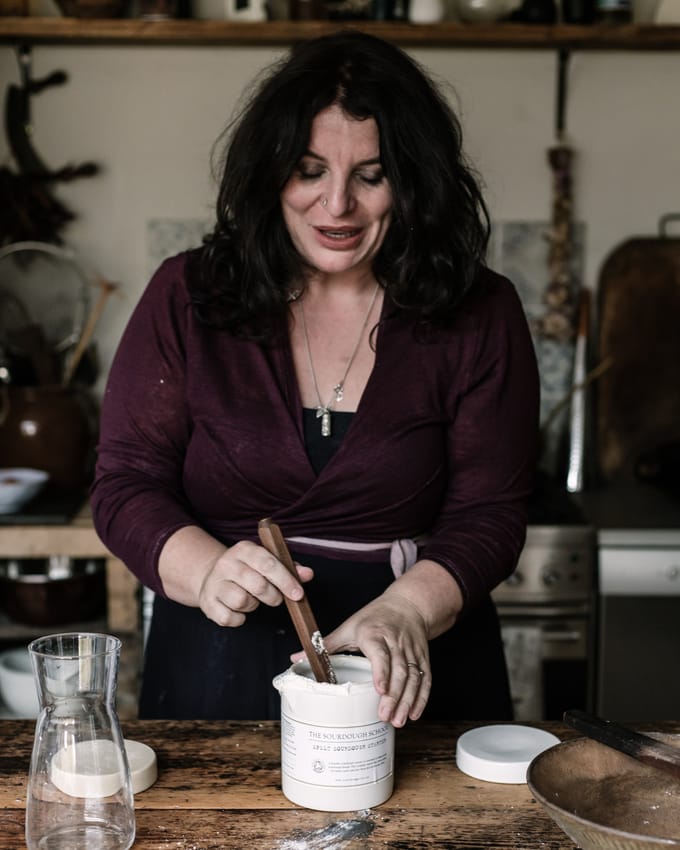
Your starter is key to the success of your bread. Every tells you what to do to make your starter work, but what if it goes wrong – how do you recognise this and how do you fix it?
Over four decades of teaching sourdough, these are the questions I am asked most often when a starter goes wrong. My answers are based on what I have learned from both the science and from working alongside thousands of bakers at The Sourdough School.
My starter smells of apples or fruit — is that normal?
A fruity aroma — apples, pears, pineapple — is one of the most common things that worries new bakers, but it is actually a sign of a mature, active starter rather than a failing one. The smell comes from ester compounds produced by the yeasts during fermentation, and in small amounts it is completely normal and rather lovely.
However, a strong or dominant fruity smell indicates that your starter has tipped into an overly acidic state, which will affect the flavour and leavening performance of your bread. Refresh it promptly — the fruity notes will settle back into a pleasant, gently tangy aroma once balance is restored. When refreshing your sourdough starter, the key is consistency: same flour, same temperature, same timing. See starter refreshment for guidance.
l.
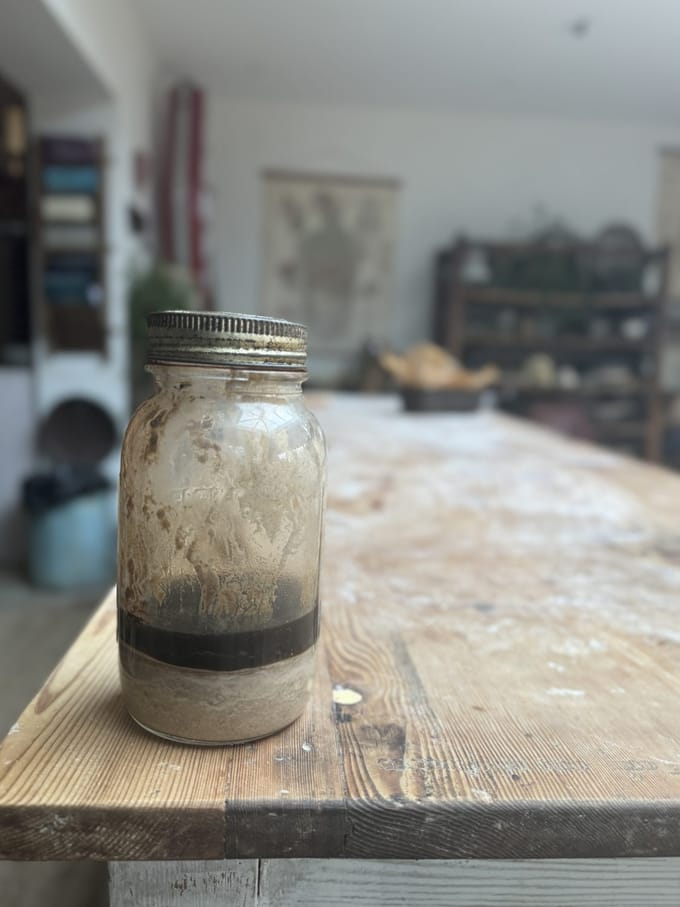
What is hooch, and how do I solve it?
Hooch is the grey or dark liquid that collects on the surface of a neglected starter — a byproduct of your yeast exhausting all available nutrients and turning to alcohol production instead. I have seen it alarm bakers who assume their starter has died. It hasn’t. Hooch is simply your starter telling you it is hungry.
Pour off the hooch and refresh your starter as follows:
- Discard two thirds of the starter to reduce acidity and make room for fresh feeding.
- Feed the remainder with equal parts flour and water at 28°C — I use 100g of each.
- Stir vigorously to incorporate air, cover loosely, and leave somewhere warm, around 23°C.
- If your starter has been seriously neglected, feed it twice daily for several days to rebuild its strength and microbial balance.
With consistent feeding, your starter will come back. I have revived starters that have been left for six months or more — patience and regular refreshing are almost always enough.
My starter smells of nail polish remover or old cheese
These are the two smells that tell you your starter has been left too long without feeding. The nail polish remover smell is acetone — a sign of stressed yeast metabolism. The old cheese or parmesan smell is butyric acid, produced by certain bacteria that proliferate when the starter becomes very acidic and depleted. Both indicate a starter that is too mature to bake with in its current state.
Do not discard it — it can almost certainly be rescued. Refresh it back-to-back at least three times before attempting to bake, allowing it to reach peak activity between each feed. Patience here pays dividends.
Can I change the flour I use?
Yes, and there are good reasons you might want to — switching to a more nutritionally diverse flour, for example, or moving towards the BALM Protocol principles of Diversity Bread. The microbial community in your starter will adapt, but it may take three to five refreshments to fully adjust to a new flour’s different enzyme profile, sugar content, and mineral composition.
Consistency in feeding supports a robust, stable starter. Chopping and changing flours frequently can unsettle the balance between the wild yeasts and lactic acid bacteria — so if you are making a permanent switch, do so gradually and give your starter time to adapt.
What kind of flour should I use?
For the best nutritional support and microbial diversity, I recommend organic, stoneground, freshly milled flour whenever possible. The outer bran and germ layers — retained in wholegrain and stoneground milling — carry the wild yeasts, minerals, and enzymesthat give your starter its character and your bread its nutritional value. Commercially roller-milled white flour strips most of this away.
Good options include wholemeal wheat, rye (particularly powerful for establishing a new starter), spelt, and heritage grain flours such as einkorn, emmer, and khorasan. Each brings its own microbial and flavour profile. Rye flour in particular is exceptionally rich in wild yeast and bacterial populations, making it my go-to for starting and reviving cultures. You can also make wonderfully distinctive starters using additions such as cocoa powder or pureed beetroot — though these are best introduced once your starter is already well established.
How long can you leave a starter before it goes wrong?
I have successfully revived starters that have been left in the refrigerator for six months or more. The short answer is: a starter stored in the fridge, well sealed, is remarkably resilient. Cold temperatures slow microbial activity dramatically, giving you a great deal of flexibility.
That said, the longer the neglect, the more work is required to revive it. A starter left for many months will often smell of butyric acid — the old cheese or parmesan note mentioned above — and may look grey and deflated. Multiple consecutive back-to-back refreshments, twice daily, will usually restore it. If after five days of diligent feeding there is no sign of life, starting fresh is a perfectly reasonable choice. See my guide to making a sourdough starter from scratch.
I’m going on holiday — does my starter need a babysitter?
No babysitter required. Refresh your starter twice a day for two days before you leave to build its resilience, then pop it in the refrigerator. A well-fed starter will be perfectly fine for two to three weeks in cold storage. When you return, bring it back to room temperature and resume twice-daily feeds for a couple of days before baking. It will return to full strength more quickly than you might expect.
For longer absences, you can also dry your starter — spread it thinly on baking parchment, allow it to dry completely, then crumble and store in an airtight container. Dried starter keeps for years and rehydrates reliably. This is also a sensible way to keep a backup of a starter you particularly value.
Should I start my own starter or get one from another baker?
Both are valid, but they produce different outcomes. Starting your own starter from scratch is a fascinating process — you are essentially coaxing wild yeasts and lactic acid bacteria from the flour and the environment into a stable, symbiotic culture. It takes patience (typically seven to fourteen days before your starter is reliably active) and some tolerance for unpredictability in the early stages. The reward is a starter with its own distinct character, shaped partly by your local environment.
Getting an established starter from an experienced baker gives you a head start: an active, balanced culture that is ready to bake with much sooner. If you are new to sourdough and want reliable results quickly, this is the simpler path. At The Sourdough School we occasionally share starters with students — do get in touch if you are interested.
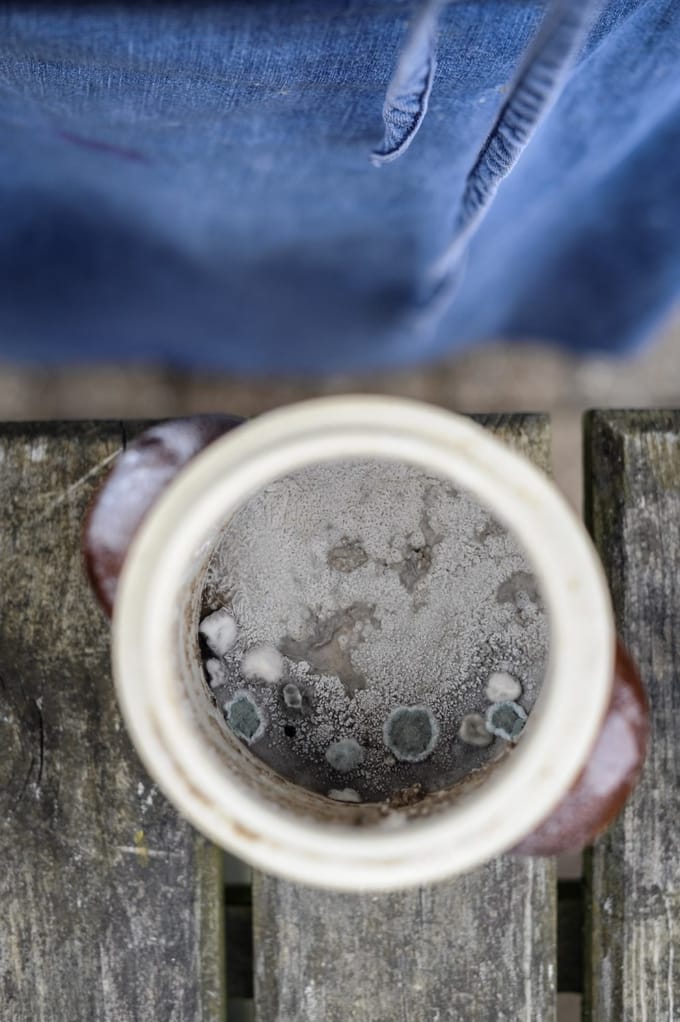
My starter smells horrid and has mould on it
Mould — particularly black, pink, or red mould — is one of the very few situations where I recommend discarding your starter entirely and beginning again. These colours indicate fungal contamination that cannot be refreshed away. Do not attempt to scrape it off and use what is underneath; the mycelium will have spread through the whole culture even if you cannot see it.
White or grey fuzzy patches are slightly less clear-cut: if caught early, you can sometimes remove the affected portion and refresh the uncontaminated remainder with rye flour at 28°C. But if there is any doubt, start fresh. Mould contamination is almost always caused by one of two things: a jar that was not cleaned properly before use, or a starter that was left so long without feeding that the protective acidic environment broke down entirely. The lactic acid bacteria in a healthy, regularly fed starter create conditions that are genuinely hostile to mould — keeping on top of feeding is your best prevention.
Mould in a sourdough starter is always a symptom of something having gone wrong in the conditions around it. The most common reasons are:
- Infrequent feeding — the single most common cause. A well-fed starter is naturally protected by the acidic environment created by its <a When feeding lapses, that acidity drops and the protective barrier breaks down.
- A dirty jar — residues left on the inside of the jar from a previous batch provide an ideal environment for mould spores to establish before your culture has a chance to acidify sufficiently.
- Cross-contamination — mould spores are airborne and abundant in most kitchens, particularly near fruit bowls, compost bins, or anywhere damp. Storing your starter uncovered or near these sources increases the risk significantly.
- Too much warmth without feeding — a warm environment accelerates microbial activity, meaning your starter exhausts its food supply much faster. If feeding frequency does not keep pace with temperature, the protective acidity collapses quickly.
- A very new starter — young starters have not yet built up a stable, robust microbial community and are far more vulnerable to mould in the first two weeks than an established culture.
- Condensation on the lid — moisture dripping back into the jar from a tightly sealed lid can introduce contaminants and dilute the surface acidity.
How and why do I convert a starter to white flour?
Wholegrain and rye flours are the best choice for establishing and maintaining a starter, because their higher mineral, enzyme, and native yeast content supports a more robust, diverse microbial community. However, there are baking situations — an open-crumb white sourdough, for example — where a white flour starter gives a cleaner, less assertive flavour profile and more predictable timing.
Converting is straightforward: simply refresh with white bread flour over three to five consecutive feeds, and your starter will adapt. White flour starters tend to peak more slowly than wholegrain ones — typically 8–12 hours at room temperature rather than 4–6 — which can actually be useful for scheduling your baking around the rest of your day. From a nutritional standpoint, though, I always recommend returning to a wholegrain or heritage grain flour for everyday baking in line with BALM Protocol principles.
Will it float? The float test explained
The float test — dropping a small spoonful of starter into water to see if it floats — is widely cited as a readiness test, but it is not reliable and I would encourage you not to rely on it. Whether a starter floats depends more on its hydration level and the gas bubble structure than on whether it is truly at peak activity. White flour starters may float; rye and wholegrain starters rarely do, even when perfectly active and ready to use.
Trust what you observe in the jar instead: a well-domed top, a network of bubbles throughout, a pleasantly tangy and yeasty aroma, and a texture that has become light and aerated. These are the signs of a starter at or near peak — ready to do its work in your dough.
How do I make my own sourdough starter from scratch?
Combine 150g of organic stoneground wholemeal flour with 150g of water at 34°C in a clean jar. Whisk vigorously to incorporate air — this is important in the early days, as the aerobic yeasts you are trying to encourage thrive with oxygen. Cover loosely with a cloth or a lid left ajar, and leave in a warm place (ideally 24–26°C) for 12–24 hours.
From day two onwards, discard half the starter each day and feed with 75g each of flour and water at 28°C. The discard step is important: it prevents a build-up of acidity that would inhibit the very organisms you are trying to cultivate. You should begin to see bubbles within three to five days; full, reliable activity typically develops over seven to fourteen days depending on your flour, water, and environment. Rye flour accelerates the process significantly if your starter is slow to get going.
For a full, illustrated guide, see how to make a sourdough starter at The Sourdough School.
All reasonable care is taken when writing about the health aspects of bread. This information is not intended as a substitute for professional medical advice. Please consult a qualified practitioner for any health concerns.

 Mobilising an army of bakers – The Sourdough Exchange – UPDATED
Leave a Reply