Dextrin in bread crusts refers to a group of carbohydrates that form on the surface of loaves during baking. These carbohydrates develop when starch breaks down under dry heat, adding colour and flavour to the crust. We use the term dextrin in bread crusts to focus on this specific baking effect rather than the broader biochemical definition.
How dextrin forms in baking
During baking, the high oven temperature causes starches near the dough’s surface to break apart. Some starch molecules convert into shorter carbohydrate chains known as dextrins. This process is part of the Maillard reaction, which also creates browning and complex flavours in bread. Dextrins are more water?soluble and slightly sweeter than the original starch, helping produce a rich crust that many bakers value.
Why dextrin matters for sourdough
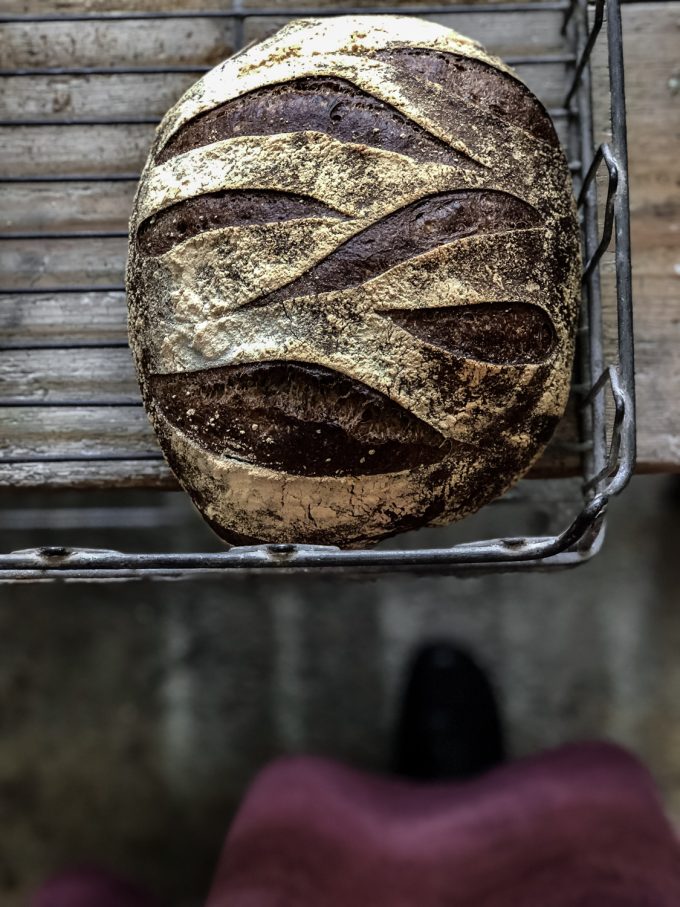
Dextrin affects both colour and taste. A darker, well?browned crust usually contains more dextrin, which adds depth of flavour and visual appeal. Because dextrin forms as part of the browning reactions, it connects to how fermentation influences crust colour and loaf texture in sourdough baking.
Health, digestion and gut relevance
Dextrins created in the crust are mostly minor carbohydrate fractions compared with the total carbohydrate content of bread. They are not a significant source of fibre or energy but may influence flavour perception. Fermentation in sourdough, demonstrated in our retreats and the diploma can help shape the balance of sugars and starches available for browning and dextrin formation.
 Desem Starter: a wholegrain sourdough culture