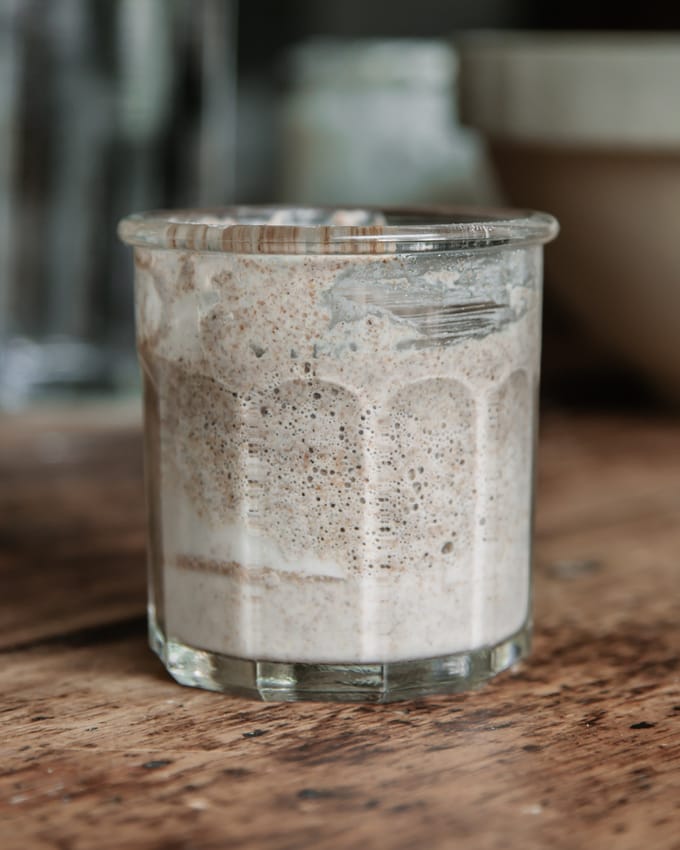
A desem starter is a type of sourdough culture made from whole?grain flour and water. It is traditionally used to make a Flemish style sourdough loaf. We use the term desem starter meaning because it describes both the culture and the way it is grown for bread making. This starter differs from some others because it relies on the natural microbes in whole grains rather than wild yeasts from the air.
How a desem starter works
A desem starter begins with whole?wheat or similar flour mixed with water. The dough ball is often kept surrounded by flour in a cool place. As it ferments slowly, the microbes in the whole grain develop and strengthen. These microbes leaven the dough, producing gas and acids that help bread rise and develop flavour. This natural process connects to broader fermentation principles that show how microbes transform carbohydrates into gases and acids.
Why desem matters in baking
Desem starter is valued for its slow, steady fermentation and its ability to create a loaf with a light texture and mild flavour. Because it uses whole grains, the resulting bread can be rich in nutrients and fibre. Many bakers find that whole?grain sourdough made with a desem starter has excellent digestibility and nourishing qualities. These benefits tie into how fermentation improves nutrient bioavailability and supports the gut microbiome during digestion.
Learn about starters
Learning to build and maintain a desem starter is a useful skill in sourdough baking. In our workshops and diploma courses, we show how different starter types, including whole?grain starters, influence dough strength, fermentation speed and crumb structure. The Proven™ Bread subscription also illustrates how consistent fermentation techniques help produce reliably nourishing loaves.
 Crumb Texture in Sourdough Bread