• Skip to main content
  • Skip to after header navigation
  • Skip to site footer

The Sourdough School Magazine

How to fix your relationship with bread by Dr Vanessa Kimbell

For in person courses, consultations and training in BALM visit The Sourdough School, or book a 1:1 meeting to get your bread personalised.

WhatsApp / Email

  • Facebook
  • Instagram
  • Pinterest
  • Twitter
  • WhatsApp
Book Your Sourdough Course
Subscribe to our newsletter

.

  • About
    • Get in Touch
    • The School
    • Podcast on Apple
    • Podcast on Spotify
    • Dr Kimbell
    • What is Baking as Lifestyle Medicine?
    • Evidence Based
  • Courses
    • Online Diploma
    • Workshops
    • Baking Retreats
    • Personalised Bread Assessments
  • Baking
    • Recipes
    • Sourdough Ingredients
    • Books by Dr Kimbell
    • Sourdough Hydration Calculator
    • The Glossary
  • Bread & Health
    • Bread Health Calculator
    • Bread & Nutrition
    • Bread & Gut Health
    • Bread Matters
  • Flour
    • Flours from Farmers Directory
    • Add Farmer to the Directory
    • British Artisan Flour Mills by Region
  • Resources
    • Equipment advice pages
    • Sourdough Baking Equipment
    • Research papers
Heath Care Providers: Training In Prescribing Baking As Lifestyle Medicine

New evidence on why gluten might not be the problem

28 December 2017 by Dr Vanessa Kimbell

The Gluten Myth

I’m skeptical. An opinion is of value, but evidence is irrefutable. I’ve been teaching sourdough baking now for seven years, and baking it for as long as I can remember and I don’t think that there has ever been a single course in which someone has not mentioned that they think that they have a problem with gluten. In almost every instance there is no real evidence against gluten itself, just a general improvement in a myriad of vague malaise that improves when wheat is omitted from the diet and people therefore conclude it must be gluten.

The perpetuation of the Gluten myth for profit.

There has literally been an explosion in gluten free products on the market in the past decade, fuelling what is for me the dark side of the food industry.  There is commercial profit and gain from misinformation, lack of understanding and the perpetuation of “gluten is bad” – a myth that has grown exponentially.

Indeed, gluten intolerance is one of the most commonly reported dietary intolerance, with more people than ever now choosing to adopt a wheat-free diet.

It is interesting however, when you start to really look into the statistics because an allergy to gluten is actually relatively rare. It’s also not easy to find official numbers, as published data on the prevalence of wheat allergy is scarce and yet many people genuinely believe that they have a food allergy. Clearly though, there is a clear discrepancy between the number of people who report that they have food allergy or intolerance, and the numbers whose food allergy/intolerance has actually been be confirmed by a medical diagnosis.

So what is going on?

Only a small number of people (estimated that only about 1% of the population) have coeliac disease, and for them eating gluten triggers symptoms such as nausea, vomiting, bloating, tiredness and diarrhoea. The only treatment for coeliac disease is to cut gluten out of the diet completely.
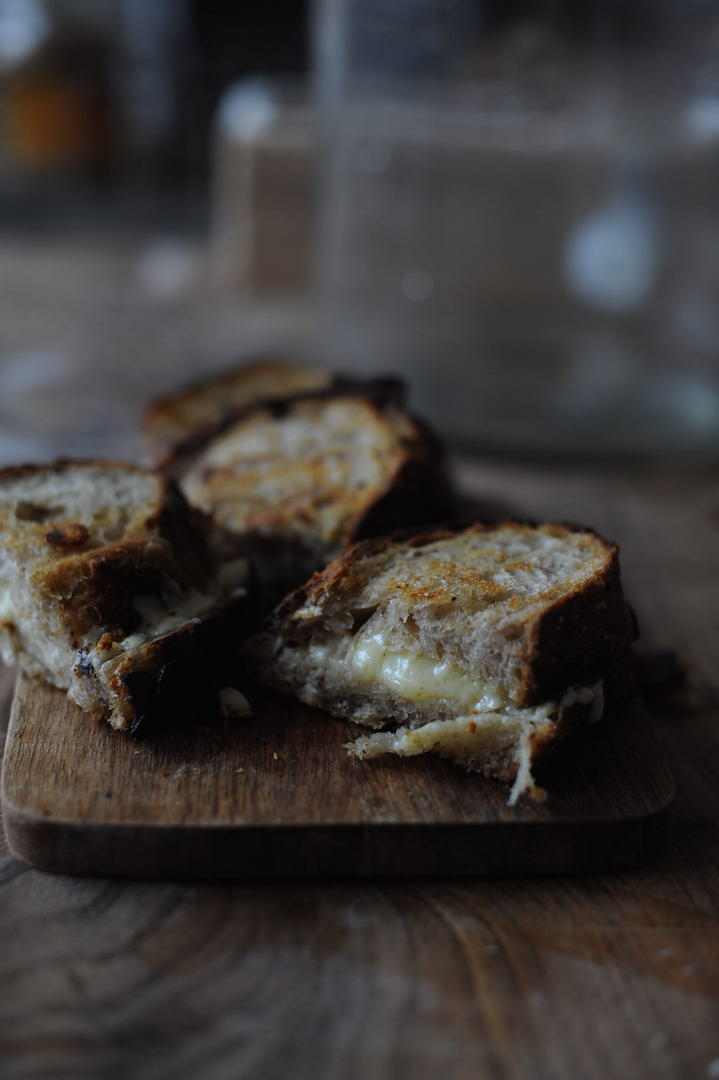
sourdough cheese toastie

Non-Coeliac gluten sensitivity.

There is another 12-15% of the population who report digestive malaise when they’ve eaten wheat, and the term non-coeliac gluten sensitivity has been used for this group.  These are people who feel that gluten may be adversely affecting their health then cut bread, cakes, puddings and pasta out of their diet to try to manage the digestive discomfort that they experience. For a long time though, I have been convinced that gluten is not, in the majority of these cases, the demon it’s been made out to be. And there’s a recently published study which supports this theory.

The answer might lie with fructans.

For some the answer might be in the finding of researchers at Oslo University Hospital in Norway who have investigated the role of fructans in causing digestive malaise. They took 59 volunteers who reported self-diagnosed gluten sensitivity but who were not coeliac. Over a period of weeks, each volunteer was put on three different diets, containing either gluten, fructans or neither. Fructans are a short-chain carbohydrate which are found in wheat, rye, barley and spelt, as well as some vegetables like onions, garlic, artichokes, cabbage, and some fruit such as plums, grapefruit and watermelon. The human gut doesn’t have the enzyme needed to digest fructans properly, so they pass through to the small intestine where they begin to be fermented by the gut microbes, causing gas, bloating and discomfort – symptoms similar to those reported by people with self-diagnosed gluten intolerance. In the Norwegian study, the volunteers were given three different cereal bars, one at a time. One type of cereal bar contained gluten, one contained fructans, and the third contained neither. Each type of bar was eaten for a week and the symptoms experienced were measured and recorded. The volunteers were then given at least seven days (or as long as it took for all the symptoms to resolve themselves) before the next type of cereal bar was eaten. During the trial, neither the researchers nor the volunteers knew which type of bar they were eating, in fact the bars were designed to look and taste identical. The results of this study showed that the bar containing fructans triggered 15% more bloating and a 13% increase in gastro-intestinal malaise in comparison to the control (not gluten or fructans) bar. The gluten bar however, seemed to have very little effect.

So, for people who believe that their symptoms are less pronounced because they are on a gluten free diet, it may well have nothing whatsoever to do with gluten. It’s simply that by cutting out wheat and other grains which contain fructans, they have eliminated this source of fructans from their diets and the improvement they see is down to this.

So how does Sourdough come into this?

Long slow fermentation of wheat using a starter with both wild yeast and lactic acid bacteria has been shown to activate some proteolytic and fructosidase enzymes in the dough, and can thus decrease the amount of proteins and fructans in the end products. There are studies showing that the FODMAP content of sourdough bread can be reduced by up to 90% so theoretically sourdough results in wheat products with improved gastrointestinal tolerability.

I say theoretically – there are actually several studies, some of which are pilot studies, that have very limited data available on the process of the sourdough fermentation itself, so are in my mind fundamentally flawed and several that show conflicting results. In the main though, the advice is that sourdough is far more tolerated, which certainly seems reflected in the number of people who report this in my classes.

All reasonable care is taken when writing about health aspects of bread, but the information it contains is not intended to take the place of treatment by a qualified medical practitioner. You must seek professional advice if you are in any doubt about any medical condition. Any application of the ideas and information contained on this website is at the reader's sole discretion and risk.

Learn more about…

The Sourdough
School
Attend a
Sourdough Retreat
Join Proven
Bread Classes
The Sourdough
School Diploma

Never miss a post

Enter your email address


About Dr Vanessa Kimbell

Dr Vanessa Kimbell is acknowledged as one of the world’s foremost authorities on bread and human health — the first person to hold a doctorate in Baking as Lifestyle Medicine and Preventative Healthcare, and the pioneer who, long before gut health became a mainstream concern, first identified the crucial role bread plays in the gut microbiome and mental wellbeing. A fourth-generation baker of Italian descent, she has been baking sourdough since the age of 11, served her traditional apprenticeship in the Dordogne, and is a time-served, French-trained qualified baker who has worked alongside some of the world’s greatest bakers including Richard Hart and Gabriele Bonci. She has spent four decades asking the questions the food industry preferred no one asked: why was industrial mono bread slowly harming us, and what would it take to make bread that genuinely nourishes?

The answer became her life’s work. As founder and Course Director of The Sourdough School in Northamptonshire — a world-renowned centre of research and education — she has taught bakers from over 84 countries, integrated the BALM (Baking as Lifestyle Medicine) Protocol into NHS clinical practice at Bethlem Royal Hospital, and developed Proven Bread: the first bread built on clinical evidence, personalised to the individual through nutrigenetics and gut microbiome assessment. She delivered the Royal College of General Practitioners‘ approved course in the Nutrition of Bread, has been a regular contributor to BBC Radio 4’s Food Programme for many years, and collaborates with leading scientists and clinicians including Professor Tim Spector — who credits her with teaching people to make the healthiest bread in the world — and Professor David Veale. Named the Sourdough Queen by The Telegraph in 2013, her influence reaches far beyond the classroom — from artisan bakers and healthcare professionals to the world’s leading food scientists and multinational food corporations.

A bestselling international author of five books, her sixth — Proven — publishes in November 2026.

More information about Vanessa can be found at
The Sourdough School,
The Sourdough Club,
on Instagram at @SourdoughClub,
@SourdoughSchool and
@vanessakimbell,
on Facebook and
LinkedIn.

Previous Post:sourdough recipe 1How can sourdough help people with IBS digest bread?
Next Post:A Summary of the Vitamins and Minerals in Malted Wholegrain Flour SOURDOUGH SCHOOL-115

Todays live for diploma students will be on 'How t Todays live for diploma students will be on 'How to engage your patient in the lifestyle changes of the BALM' with @vanessakimbell 

In their 6pm live session, we help keep our students on track with the syllabus and discuss the application of Baking As Lifestyle Medicine to the 6 pillars of Lifestyle medicine, applying the research papers, application of the Research, and how this ties into prescribing, along with guest lecturers, discussions and sharing knowledge.

#lifestylemedicine #health #functionalmedicine #nutrition #integrativemedicine #healthylifestyle #wellness #lifestyle #rcgp #dietitian #nutritionist #healthcareprofessional #holistichealth #healthyliving #plantbased #guthealth #naturopathicmedicine #selfcare #functionalnutrition  #naturopathicdoctor #foodasmedicine #foodismedicine #lifestylegoals #cpd #lifestylechange #mentalhealth #sourdough #sourdoughschool #bakeforhealth
BAKE, ANALYSE, EAT; RECALIBRATE & REPEAT. 📆 The S BAKE, ANALYSE, EAT; RECALIBRATE & REPEAT.

📆 The Sourdough School Clinic - Thursdays 8pm - for students of The Sourdough School 

✏️ In this weekly live session, we cover technical baking questions. Students can submit their Baking Record Sheets in advance of the session.

📋 We look at the details of our student's bakes - the specifics of the flour, timings and temperatures. Using our sourdough record sheets Vanessa will make suggestions on how they might modify, or recalibrate the next time they bake.

Follow the link in the bio to learn more about becoming a student at The Sourdough School 👆

#sourdough #sourdoughschool #bread #sourdoughlove #sourdoughlover #naturalleavened #leavening #levain #realbread #breadmaking #bakebread #makebread #makerealbread #learntobakebread #breadmakingclass #sourdoughstories #bakingforlove #bakingtherapy #sourdoughbaking
IBS AWARENESS MONTH Do you suffer from irritable IBS AWARENESS MONTH

Do you suffer from irritable bowel syndrome (IBS)? It can be tough to deal with the uncomfortable symptoms of stomach cramps, constipation, diarrhoea and bloating. But did you know that making dietary changes, such as incorporating sourdough bread into your diet, could help alleviate some of those symptoms?

Studies have shown that sourdough's long, slow fermentation process can reduce IBS symptoms. Plus, during #ibsawarenessmonth, we're exploring how adding different herbs and spices to your sourdough can further improve both the flavour and the digestion of your bread.

Let's talk about gut health, fermentation, and how sourdough can be a delicious and healthy addition to your diet. Join the conversation and share your experiences with IBS and sourdough.

#guthealth #healyourgut #healthygut #guthealing #guthealthmatters #letfoodbethymedicine #foodasmedicine #gutbrainconnection #nutrientdense #micronutrients #digestivehealth #nutritionfacts #microbiome #breadandguts #ibsawarenessmonth
THE SOURDOUGH SCHOOL – HAND CARVED WOODEN LAME On THE SOURDOUGH SCHOOL – HAND CARVED WOODEN LAME

One of the biggest issues around using a plastic lame to score sourdough, of course, is that eventually the blade will become blunt and the lame could end up in landfill.  So several years ago I talked to my dear friend EJ about developing a lame with a replaceable blade. And he came up with this very beautiful hand carved wooden lame.

Very sadly EJ is no longer with us. Recently a friend of EJ’s who is also a wood turner and carver offered to make these again for us in remembrance of our dear friend.

Follow the link in the bio to our shop where you can find our full selection of wooden sourdough tools 👆

#sourdough #sourdoughschool #bread #sourdoughlove #sourdoughlover #naturalleavened #leavening #levain #realbread #breadmaking #bakebread #makebread #makerealbread #learntobakebread #breadmakingclass #sourdoughstories #bakingforlove #bakingtherapy #sourdoughbaking
The Baking As Lifestyle Medicine (BALM) Protocol The Baking As Lifestyle Medicine (BALM) Protocol

The current food system is broken at multiple levels, from the pesticides used in our soils to the emulsifiers and additives adulterating industrially-processed foods. Nowhere is this more apparent than in the bread we eat.  The figures reported by the UK Flour Millers say that bread is bought by a staggering “99.8% of British households” and that “the equivalent of nearly 11 million loaves are sold each day. Approximately 60-70% of the bread we eat is white and sandwiches are thought to account for 50% of overall bread consumption. Average bread purchases are the equivalent of 60.3 loaves per person per year.” 

Most bread sold is made by modern processing methods that strip heart-healthy whole grains of their nutrient contents, resulting in low-fibre bread with a high glycemic index. Over time, white processed bread can increase a person’s risk of insulin resistance alongside other lifestyle diseases.

We’re on a mission to revolutionise the bread making process at every level – from soil to slice. The rules governing this are laid out in our Baking As Lifestyle Medicine protocol. 

#lifestylemedicine #health #functionalmedicine #nutrition #integrativemedicine #healthylifestyle #wellness #lifestyle #rcgp #dietitian #nutritionist #healthcareprofessional #holistichealth #healthyliving #plantbased #guthealth #naturopathicmedicine #selfcare #functionalnutrition  #naturopathicdoctor #foodasmedicine #foodismedicine #lifestylegoals #cpd #lifestylechange #mentalhealth #sourdough #sourdoughschool #bakeforhealth
Follow on Instagram

About

Email: [email protected]
Tel: +44 (0)7813308301

The Sourdough School Ltd
Registered in England & Wales: 08412236

Terms & Conditions

Privacy Policy

  • Facebook
  • Instagram
  • Pinterest
  • Twitter

Latest Posts

Glyphosate in Oats: Why Organic Matters more for some than others

What is the difference between Ambient and Retarded Sourdough?

Why You Feel Better Eating Bread on Holiday (And How to Fix It at Home)

What is Sourdough? The Complete Guide to Real Sourdough Bread

The Classic Diversity Sourdough Baguettes – Ambient

BANT Member
Lifecode GX

Subscribe

Enter your email address

Search


Terms & Conditions | Competition Terms & Conditions | Privacy Policy
Copyright © 2009–2026 Vanessa Kimbell | Login
Registered in England and Wales: 08412236
Website by Callia Web