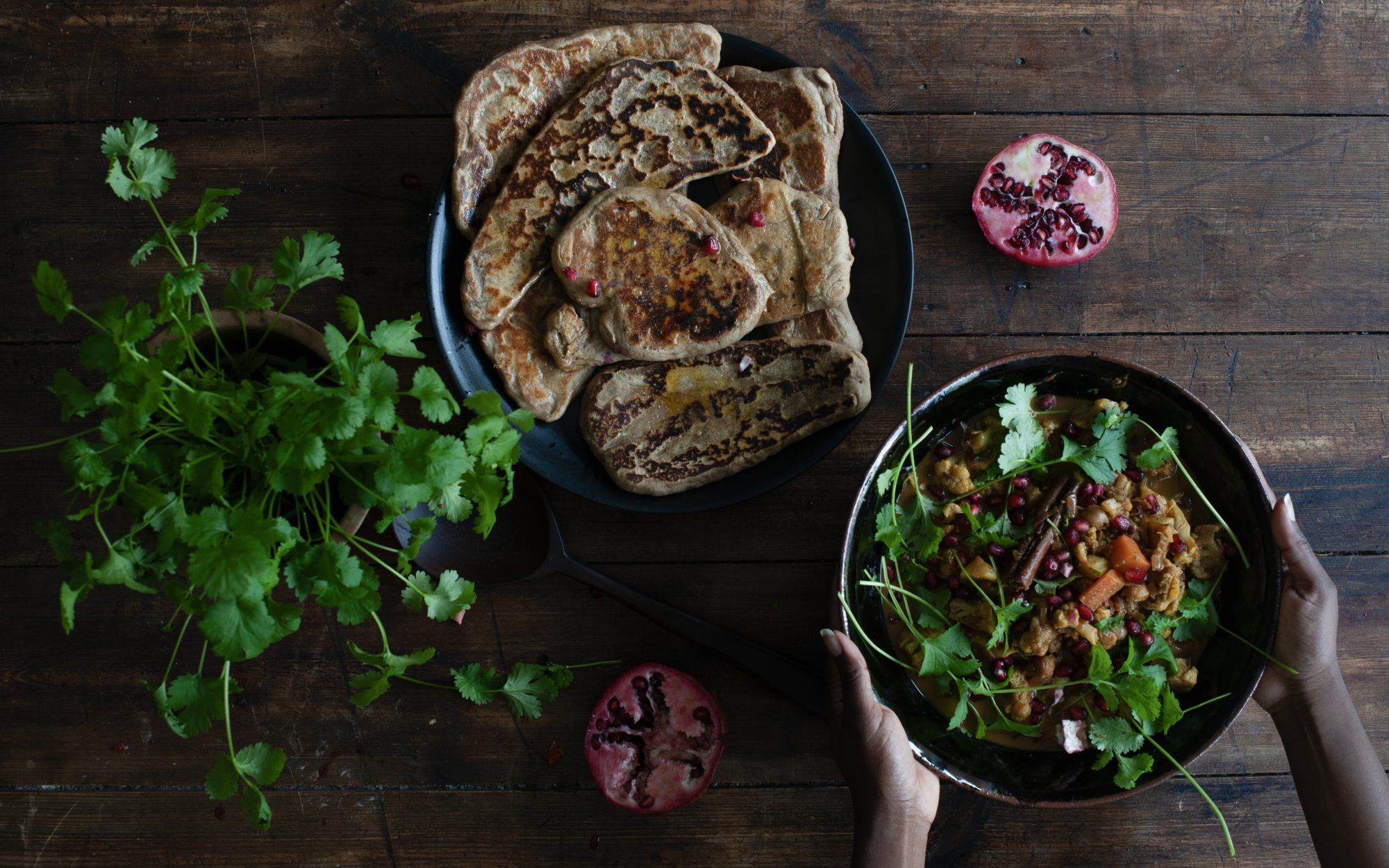
 So when you think of sourdough, most people when they come to The Sourdough School are thinking the classic Tartine sourdough boule. It's glamorous, and of course it's the first thing we think of. But actually, a long time before America was even discovered, we were making flatbreads. In fact, flatbreads are the oldest bread that there is.
And it's easy to dismiss and just say, I want to immediately start baking an advanced sourdough. But the truth is it's the everyday breads, the ones that see you through when there's very little going on, that are actually probably more important than the two-day or three-day long sourdough fermentation for the sourdough boule. These are staples in most people's diets.
I particularly noted a lot of flatbreads in Morocco. I've suggested adding ras el hanout spice mix is a traditional Morrocan blend for tagines and stews. This North African spice blend can often include up to 30 ingredients, the focus is often on spices of cumin, pepper, ginger, nutmeg and turmeric. I really loved the different textures you can get just by a small change in hydration. I started playing with a lot more barley and flatbreads and really felt like they brought another dimension to everyday food, particularly to curries. And let's be honest, pizza is actually a flatbread.
I tend to think of flatbreads as being probably the very first thing that I want students to practise. In some ways, to get used to the rhythm of refreshing a sourdough starter, to get used to how versatile they are, trying out different flours, using spelt, einkorn, emmer, barley, incorporating diversity in as a basic foundational principle to bread. But more than anything, they teach your hands to move and to get used to the dough.
You know, it sounds ridiculous, but if you are learning to play a musical instrument, you'd think nothing of learning your scales. This is the same thing just with bread.
It's also about accessibility. When I say that, I don't just mean accessibility for not having the expensive equipment. It's about getting your kids involved. It's about leaving your teenager to finish shaping the breads, giving them that sense of involvement in the everyday food when they don't want to be involved with anything else.
And stuffed flatbreads, flatbreads used as sandwiches, flatbreads on picnics, flatbreads to dip in hummus, flatbreads to dip in yolky eggs. I mean, they're so versatile. Small flatbreads, large flatbreads, thick flatbreads, thin flatbreads. I mean, I can go on and on.
I particularly love the flatbreads in India. And in fact, it is my dream one day to immerse myself in Indian culture, go to India again — I have been before — and just spend my whole time exploring naturally fermented flatbreads.
But for now, I'm going to give you my basic recipe. It's here. You can use older starter as long as it's still got a bit of life left in it. Personally, I prefer to use first refreshment starter. I also never compromise on the quality of my flour. Diversity is naturally incorporated with a botanical blend. I often use flatbreads to assess the flour, see how quickly they ferment, to get a true sense of flavour. And as an en route recipe for refreshing my starter as I build towards making a sourdough boule, especially if my starter's been in the fridge for a week or two.
Anyway, here it is. Please feel free to play, enjoy, and if you like it, please comment.
Starter: Lively Bubbly
Makes 12 small naans or 1 giant naan to serve 12 > Hydration 70%
DDT: 28C
Flours
For The Dough
- 235g water
- 100g natural yogurt or coconut yoghurt
- 100g bubbly, lively first-build starter
- 250g organic white flour (13% protein) of choice
- 250g Botanical Blend No. 2 or organic stoneground wholegrain flour (13–14%)
- A teaspoon of ras el hanout spice mix
- 10g salt
- a little oil, for the work surface
- Ghee and or honey to finish
Bake Temp
80°C/160°C fan/350°F/gas mark 4
Bake Time
22–24 minutes
Equipment
- A mixing bowl
- Wooden spoon
- Dough Scraper
- Baking tray
Tutorials
| Refresh starter | Day 1, 8pm |
| Mix dough, make sure your DDT is 28C | Day 2, 8am |
| Preheat Oven To 200°C/180°C fan/400°F/gas mark 6. Shape, rest the dough for minutes then bake. Drop oven and bake at 180°C/160°C fan/350°F/gas mark 4 | Day 2, 6pm |
Guidance, tips & techniques
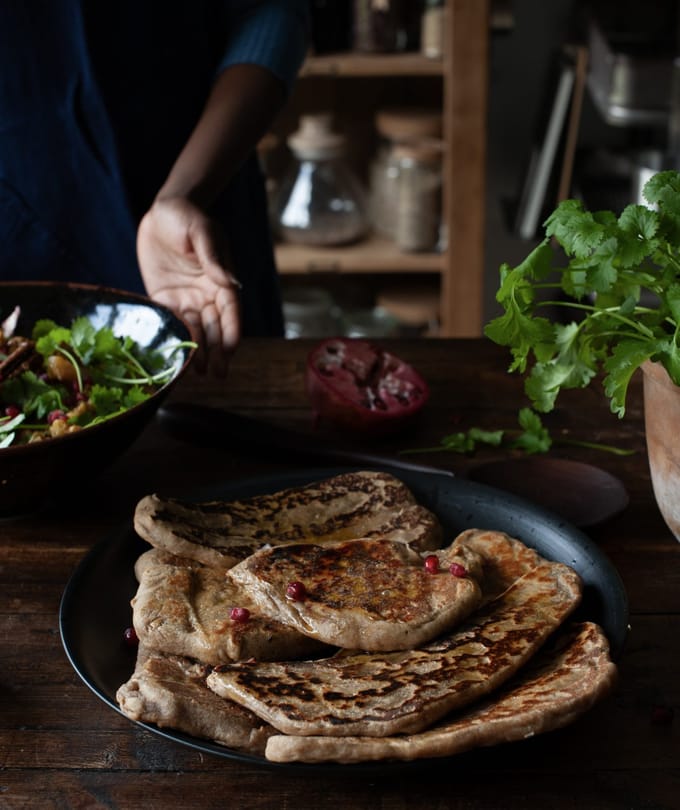
To make the dough, whisk together the water, yogurt and starter in a bowl. In a separate bowl, mix together the flours and salt. Add the liquid to the flours and use a wooden spoon to start bringing the dough together. This is quite a low-hydration dough and can be a little tight, so you might want to use your hands to mix the dough once the liquid has been absorbed. If you are finding it difficult to get the dough to come together, you can dip your hand into a jug of cold water, just to wet it slightly, and continue mixing.
Once you have a stiff ball of dough with no dry flour remaining, place it in an oiled bowl and cover with a shower cap or damp tea towel. Leave the dough on the kitchen counter to prove until the evening.
When you are ready to bake the naan, preheat your oven to 200°C/400°F/gas mark 6.
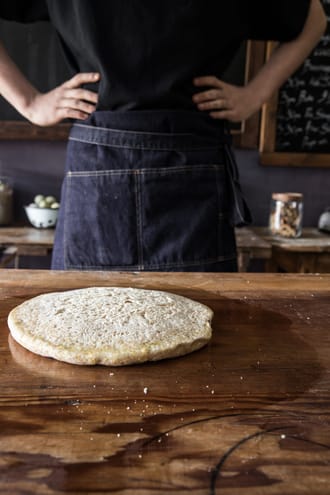
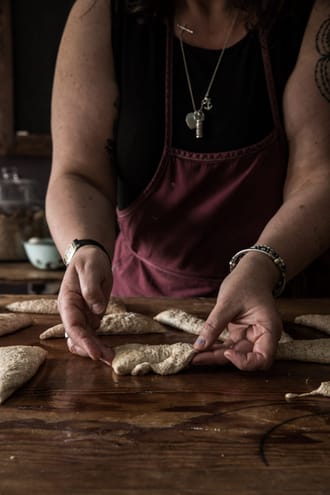
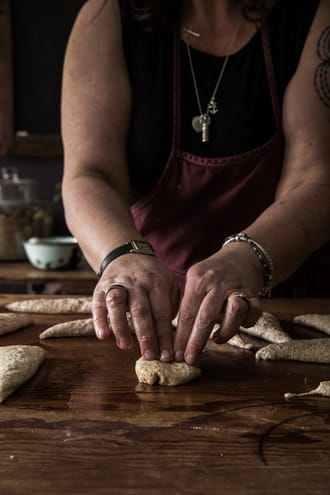
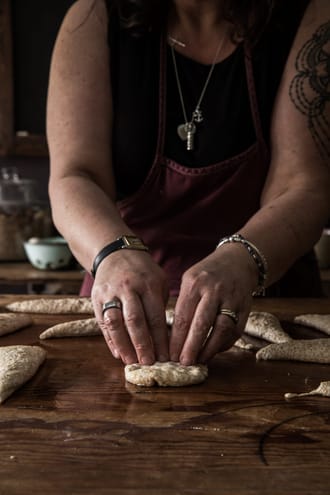
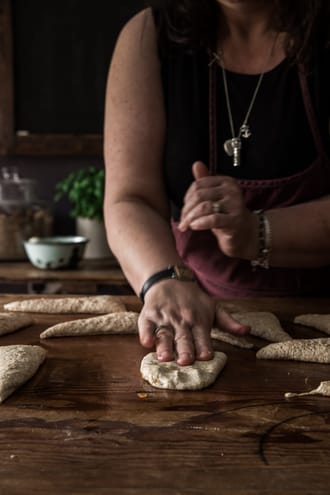
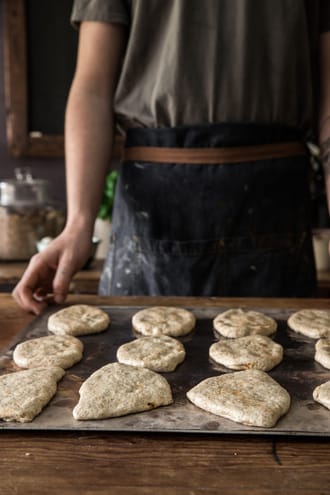
Pour a little oil on to worksurface and turn out the dough. Using your fingers, gently dimple the dough outwards to form an oval measuring about 25 x 23 cm (10 x 9in).
Transfer the bread to a baking tray and leave to rest for 20 minutes to allow the gluten to relax.
As you put the bread into the oven, reduce the heat to 180°C/350°F/gas mark 4. Bake for 22–24 minutes, checking after about 20 minutes because every oven is different.
Remove from the oven and cool slightly on a wire rack before serving.
How to Store
The breads are best eaten on the day they are baked. You can wrap them in greaseproof paper and a clean tea towel to keep for the next day, but no longer. I would also recommend wrapping the naan breads as they come out of the oven to keep them soft – if you leave them to cool unwrapped, they will go hard.

 Why you need to avoid white bread and is sourdough is better?