• Skip to main content
  • Skip to after header navigation
  • Skip to site footer

The Sourdough School Magazine

How to fix your relationship with bread by Dr Vanessa Kimbell

For in person courses, consultations and training in BALM visit The Sourdough School, or book a 1:1 meeting to get your bread personalised.

WhatsApp / Email

  • Facebook
  • Instagram
  • Pinterest
  • Twitter
  • WhatsApp
Book Your Sourdough Course
Subscribe to our newsletter

.

  • About
    • Get in Touch
    • The School
    • Podcast on Apple
    • Podcast on Spotify
    • Dr Kimbell
    • What is Baking as Lifestyle Medicine?
    • Evidence Based
  • Courses
    • Online Diploma
    • Workshops
    • Baking Retreats
    • Personalised Bread Assessments
  • Baking
    • Recipes
    • Sourdough Ingredients
    • Books by Dr Kimbell
    • Sourdough Hydration Calculator
    • The Glossary
  • Bread & Health
    • Bread Health Calculator
    • Bread & Nutrition
    • Bread & Gut Health
    • Bread Matters
  • Flour
    • Flours from Farmers Directory
    • Add Farmer to the Directory
    • British Artisan Flour Mills by Region
  • Resources
    • Equipment advice pages
    • Sourdough Baking Equipment
    • Research papers

Subclinical

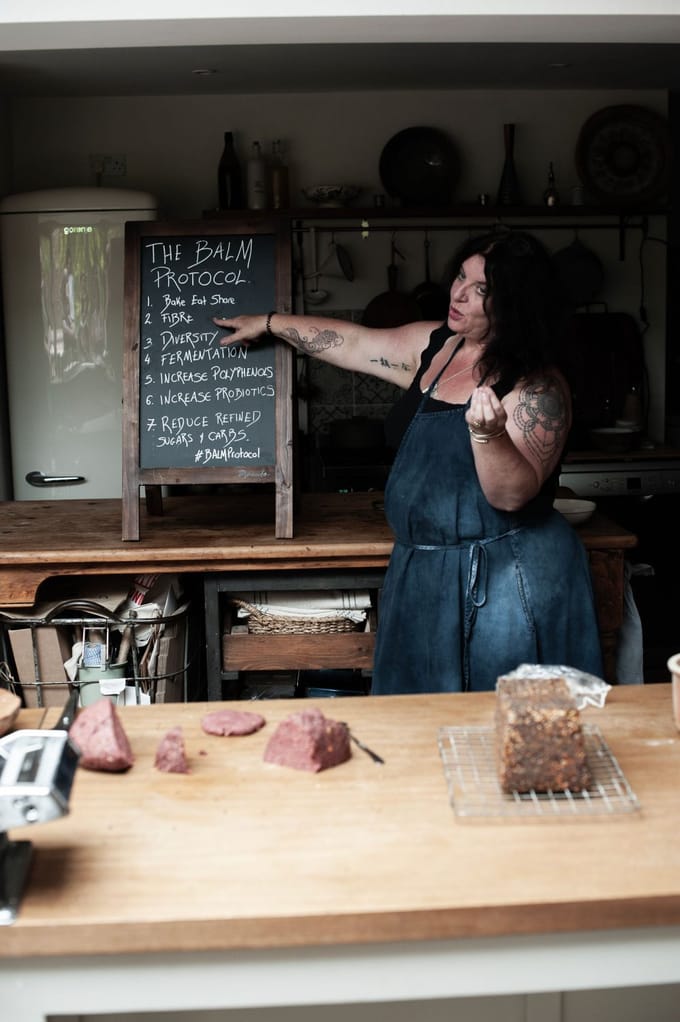
Proven, Baking as Lifestyle medicine teaching from Vanessa - Dr Vanessa Kimbell worlds leading expert in bread and showing the 7 principles a ta blackboard for the protocol

You will often heart me talking about subclinical.  One of the reasons that I use nutrigenetics testing is to better identify potential subclinical nutrient deficiencies. But what is subclinical and what does it mean? 

So this is a  state in which a physiological imbalance or deficiency is present but does not meet standard diagnostic thresholds or produce obvious signs on routine tests.
Subclinical states can still drive low-grade inflammation, alter function, and shape long-term health — particularly in nutrition-sensitive pathways such as methylation.

WHY IT MATTERS

Subclinical imbalances often hide “in plain sight”. People may feel persistently tired, foggy, anxious, or experience digestive discomfort, yet standard results appear “normal”.
Crucially, most healthcare systems do not assess nutrient bioavailability — only total amounts in blood.
For nutrients like folate and vitamin B12, having enough in circulation is not the same as having enough in an active, usable form at the tissue level.

HOW IT PRESENTS

Subclinical states tend to produce subtle, cumulative effects rather than dramatic symptoms. Common patterns include low mood or motivation, poor stress tolerance, impaired gut motility, changes in stool form, sleep disturbance, and heightened pain sensitivity — all of which can reflect nutrient-dependent shifts in the gut microbiome and neurotransmitter signalling.

EXAMPLES

  • Folate–B12–Homocysteine: Serum folate appears adequate, but inefficient conversion to 5-MTHF (e.g. with MTHFR variants) leaves methylation under-powered.
    Homocysteine creeps up, nudging cardiovascular risk and affecting neurotransmitter synthesis, despite “normal” folate on paper.
  • Low Stomach Acid & B12: Borderline B12 with symptoms of fatigue or neuropathy where low stomach acid reduces intrinsic factor activity and B12 absorption. Standard B12 may sit within range while functional need is unmet.
  • IBS Phenotype: Recurring bloating, pain, and irregular stools consistent with IBS, driven by subtle nutrient shortfalls and microbiome shifts that maintain low-grade inflammation without overt pathology.
  • Micronutrient Access vs Intake: Diet provides folate-rich foods, yet poor bioavailability (processing losses, inhibitors, or lack of microbial transformation) limits cellular uptake and use.

ASSESSMENT AND LIMITS OF TESTING

Routine NHS panels do not measure nutrient bioavailability or active forms. For folate, typical testing reports total serum folate rather than tissue availability of 5-MTHF; for B12, standard assays may look “normal” despite functional shortfall.
Functional indicators (e.g. homocysteine for one-carbon metabolism) can suggest inefficiency even when headline nutrients appear adequate. Interpretation must be clinical and contextual.

RELEVANCE TO BREAD AND FERMENTATION

Long, slow fermentation and botanically diverse doughs can improve folate retention and bioavailability, while supporting a favourable gut microbiome.
In practice, breads built with naturally folate-rich ingredients and fermented for 18+ hours can better serve methylation demands, potentially reducing subclinical pressure on mood, cognition, and gut function.

SEE ALSO

Folate •
Homocysteine •
Methylation •
Bioavailability •
Fermentation •
Gut microbiome •
Stomach acid •
IBS •
Inflammation

Take a look at our courses at The Sourdough School

All reasonable care is taken when writing about health aspects of bread, but the information it contains is not intended to take the place of treatment by a qualified medical practitioner. You must seek professional advice if you are in any doubt about any medical condition. Any application of the ideas and information contained on this website is at the reader's sole discretion and risk.

Previous Post:Neurotransmitters
Next Post:HMG-CoA Reductase and Cholesterol RegulationSourdough Pocket Breads

Learn more about…

The Sourdough
School
Attend a
Sourdough Retreat
Join Proven
Bread Classes
The Sourdough
School Diploma

Never miss a post

Enter your email address


Todays live for diploma students will be on 'How t Todays live for diploma students will be on 'How to engage your patient in the lifestyle changes of the BALM' with @vanessakimbell 

In their 6pm live session, we help keep our students on track with the syllabus and discuss the application of Baking As Lifestyle Medicine to the 6 pillars of Lifestyle medicine, applying the research papers, application of the Research, and how this ties into prescribing, along with guest lecturers, discussions and sharing knowledge.

#lifestylemedicine #health #functionalmedicine #nutrition #integrativemedicine #healthylifestyle #wellness #lifestyle #rcgp #dietitian #nutritionist #healthcareprofessional #holistichealth #healthyliving #plantbased #guthealth #naturopathicmedicine #selfcare #functionalnutrition  #naturopathicdoctor #foodasmedicine #foodismedicine #lifestylegoals #cpd #lifestylechange #mentalhealth #sourdough #sourdoughschool #bakeforhealth
BAKE, ANALYSE, EAT; RECALIBRATE & REPEAT. 📆 The S BAKE, ANALYSE, EAT; RECALIBRATE & REPEAT.

📆 The Sourdough School Clinic - Thursdays 8pm - for students of The Sourdough School 

✏️ In this weekly live session, we cover technical baking questions. Students can submit their Baking Record Sheets in advance of the session.

📋 We look at the details of our student's bakes - the specifics of the flour, timings and temperatures. Using our sourdough record sheets Vanessa will make suggestions on how they might modify, or recalibrate the next time they bake.

Follow the link in the bio to learn more about becoming a student at The Sourdough School 👆

#sourdough #sourdoughschool #bread #sourdoughlove #sourdoughlover #naturalleavened #leavening #levain #realbread #breadmaking #bakebread #makebread #makerealbread #learntobakebread #breadmakingclass #sourdoughstories #bakingforlove #bakingtherapy #sourdoughbaking
IBS AWARENESS MONTH Do you suffer from irritable IBS AWARENESS MONTH

Do you suffer from irritable bowel syndrome (IBS)? It can be tough to deal with the uncomfortable symptoms of stomach cramps, constipation, diarrhoea and bloating. But did you know that making dietary changes, such as incorporating sourdough bread into your diet, could help alleviate some of those symptoms?

Studies have shown that sourdough's long, slow fermentation process can reduce IBS symptoms. Plus, during #ibsawarenessmonth, we're exploring how adding different herbs and spices to your sourdough can further improve both the flavour and the digestion of your bread.

Let's talk about gut health, fermentation, and how sourdough can be a delicious and healthy addition to your diet. Join the conversation and share your experiences with IBS and sourdough.

#guthealth #healyourgut #healthygut #guthealing #guthealthmatters #letfoodbethymedicine #foodasmedicine #gutbrainconnection #nutrientdense #micronutrients #digestivehealth #nutritionfacts #microbiome #breadandguts #ibsawarenessmonth
THE SOURDOUGH SCHOOL – HAND CARVED WOODEN LAME On THE SOURDOUGH SCHOOL – HAND CARVED WOODEN LAME

One of the biggest issues around using a plastic lame to score sourdough, of course, is that eventually the blade will become blunt and the lame could end up in landfill.  So several years ago I talked to my dear friend EJ about developing a lame with a replaceable blade. And he came up with this very beautiful hand carved wooden lame.

Very sadly EJ is no longer with us. Recently a friend of EJ’s who is also a wood turner and carver offered to make these again for us in remembrance of our dear friend.

Follow the link in the bio to our shop where you can find our full selection of wooden sourdough tools 👆

#sourdough #sourdoughschool #bread #sourdoughlove #sourdoughlover #naturalleavened #leavening #levain #realbread #breadmaking #bakebread #makebread #makerealbread #learntobakebread #breadmakingclass #sourdoughstories #bakingforlove #bakingtherapy #sourdoughbaking
The Baking As Lifestyle Medicine (BALM) Protocol The Baking As Lifestyle Medicine (BALM) Protocol

The current food system is broken at multiple levels, from the pesticides used in our soils to the emulsifiers and additives adulterating industrially-processed foods. Nowhere is this more apparent than in the bread we eat.  The figures reported by the UK Flour Millers say that bread is bought by a staggering “99.8% of British households” and that “the equivalent of nearly 11 million loaves are sold each day. Approximately 60-70% of the bread we eat is white and sandwiches are thought to account for 50% of overall bread consumption. Average bread purchases are the equivalent of 60.3 loaves per person per year.” 

Most bread sold is made by modern processing methods that strip heart-healthy whole grains of their nutrient contents, resulting in low-fibre bread with a high glycemic index. Over time, white processed bread can increase a person’s risk of insulin resistance alongside other lifestyle diseases.

We’re on a mission to revolutionise the bread making process at every level – from soil to slice. The rules governing this are laid out in our Baking As Lifestyle Medicine protocol. 

#lifestylemedicine #health #functionalmedicine #nutrition #integrativemedicine #healthylifestyle #wellness #lifestyle #rcgp #dietitian #nutritionist #healthcareprofessional #holistichealth #healthyliving #plantbased #guthealth #naturopathicmedicine #selfcare #functionalnutrition  #naturopathicdoctor #foodasmedicine #foodismedicine #lifestylegoals #cpd #lifestylechange #mentalhealth #sourdough #sourdoughschool #bakeforhealth
Follow on Instagram

About

Email: [email protected]
Tel: +44 (0)7813308301

The Sourdough School Ltd
Registered in England & Wales: 08412236

Terms & Conditions

Privacy Policy

  • Facebook
  • Instagram
  • Pinterest
  • Twitter

Latest Posts

Glyphosate in Oats: Why Organic Matters more for some than others

What is the difference between Ambient and Retarded Sourdough?

Why You Feel Better Eating Bread on Holiday (And How to Fix It at Home)

What is Sourdough? The Complete Guide to Real Sourdough Bread

The Classic Diversity Sourdough Baguettes – Ambient

BANT Member
Lifecode GX

Subscribe

Enter your email address

Search


Terms & Conditions | Competition Terms & Conditions | Privacy Policy
Copyright © 2009–2026 Vanessa Kimbell | Login
Registered in England and Wales: 08412236
Website by Callia Web