Benzoyl peroxide is a bleaching agent commonly used in industrial food processing. In baking, it’s used to whiten flour and speed up the ageing process. This practice creates a uniform appearance but may reduce the nutritional integrity of the flour. However, it is banned in the European Union due to concerns over food safety and health.
Use in Flour Processing
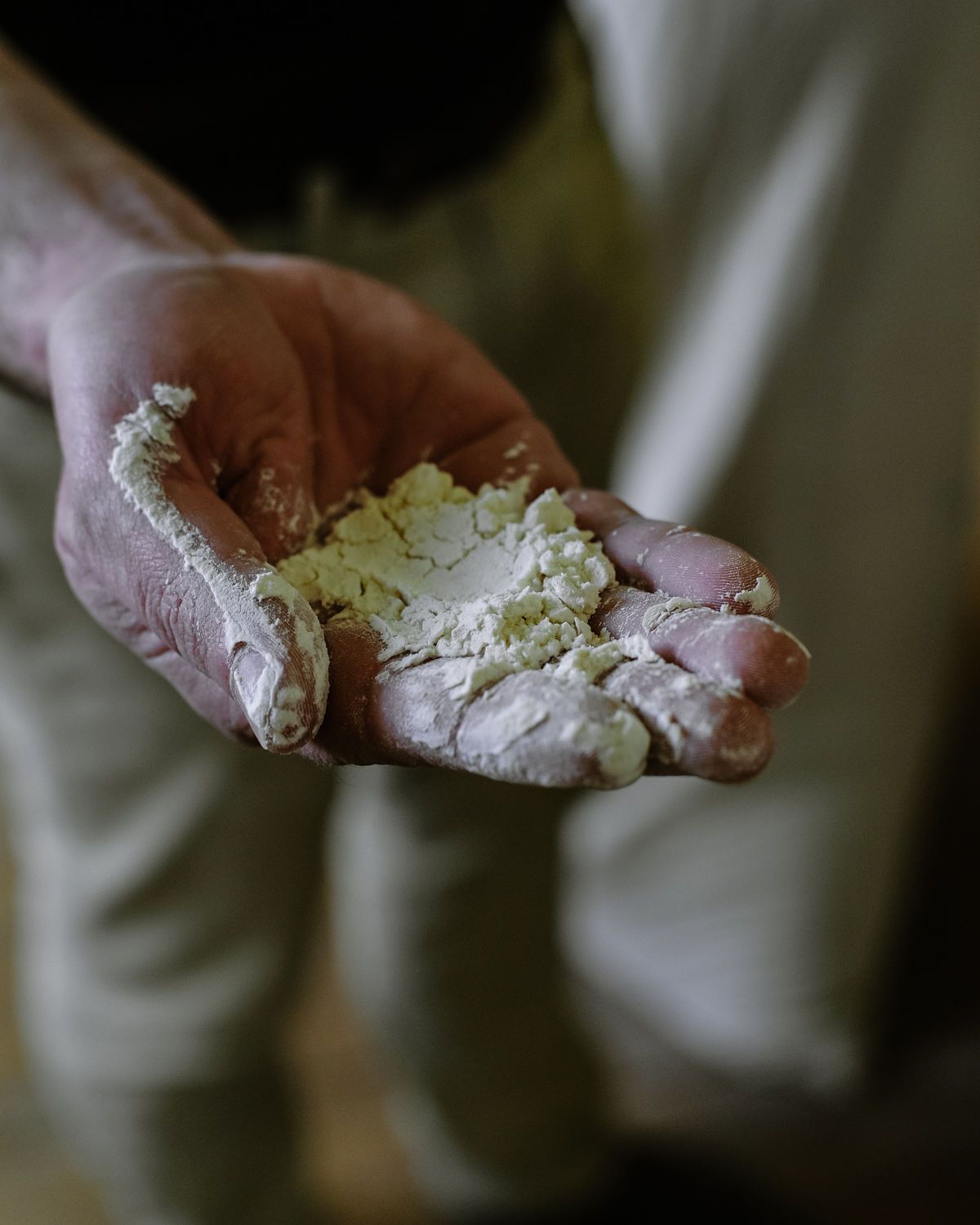
Benzoyl peroxide is still permitted in food production in countries like the United States, where it is often used to bleach refined white flour. The treatment strips away natural pigments and enzymes, altering both the appearance and nutrient profile of the flour. Unlike wholegrain flour, bleached flour has fewer natural antioxidants and less structural complexity.
This kind of processing prioritises aesthetics and shelf life over nutrition and digestibility.
Why We Avoid Bleached Flour
At The Sourdough School, we never use bleached or chemically treated flour. Our approach focuses on using freshly milled, unrefined flours that maintain their natural flavour, fibre, and phytochemicals.
Our botanical blend flours are specially formulated from whole grains, seeds, and herbs to nourish both the body and the gut microbiome. These blends offer an alternative to the highly refined flours often treated with chemicals like benzoyl peroxide.
Choosing Better Flour
For home bakers, avoiding chemically treated flour is simple: choose unbleached, organic, or stoneground varieties, many of which you can find in our shop. Our bread kits and starter kits contain high-quality flour designed to support gut health through natural fermentation.
You can also explore how flour quality and slow fermentation work together to enhance nutrition through our 3-Day Introduction to Sourdough Workshops or join our online memberships for ongoing education and community support.
 Bench Rest