• Skip to main content
  • Skip to after header navigation
  • Skip to site footer

The Sourdough School Magazine

How to fix your relationship with bread by Dr Vanessa Kimbell

For in person courses, consultations and training in BALM visit The Sourdough School, or book a 1:1 meeting to get your bread personalised.

WhatsApp / Email

  • Facebook
  • Instagram
  • Pinterest
  • Twitter
  • WhatsApp
Book Your Sourdough Course
Subscribe to our newsletter

.

  • About
    • Get in Touch
    • The School
    • Podcast on Apple
    • Podcast on Spotify
    • Dr Kimbell
    • What is Baking as Lifestyle Medicine?
    • Evidence Based
  • Courses
    • Online Diploma
    • Workshops
    • Baking Retreats
    • Personalised Bread Assessments
  • Baking
    • Recipes
    • Sourdough Ingredients
    • Books by Dr Kimbell
    • Sourdough Hydration Calculator
    • The Glossary
  • Bread & Health
    • Bread Health Calculator
    • Bread & Nutrition
    • Bread & Gut Health
    • Bread Matters
  • Flour
    • Flours from Farmers Directory
    • Add Farmer to the Directory
    • British Artisan Flour Mills by Region
  • Resources
    • Equipment advice pages
    • Sourdough Baking Equipment
    • Research papers
Professional Bakers: Certification In Baking As Lifestyle Medicine

Learning to bake – an interview with Michel Suas

21 October 2020 by Dr Vanessa Kimbell

Michel Suas – Founder of the San Fransisco Baking Institute

No baker wakes up one morning knowing how to bake.  It takes time, and practice and inspiration and I have worked with and met many bakers over the years.  There are some bakers that stand out more than others.  The ones who influence and change an industry to such an extent that you can see, or even, taste reflections of their work on bakery counters all over the world.

Michel Suas is one of those bakers, and immaculate presentation and attention to the tiniest detail are some of the recognisable traits I spot in the patisserie of bakers who have been taught by Michel. In 2016, I was fortunate enough to meet and spend some time with Michel in San Francisco at the San Francisco Baking Institute (SFBI), a baking school and consultancy that he founded with his wife, Evelyne, almost 25 years ago. I loved chatting with Michel Suas; he’s incredibly knowledgeable about all things related to bread making. Articles about Michel in the American media generally refer to him as a ‘baking guru’, but what they might not tell you is that he’s also kind. I say this because, when he realised that I was stuck without a ride, he drove me back into the centre of San Francisco in rush hour. It was in the opposite direction to his home at the end of a long day, and we chatted in the car for almost an hour and a half on the highway, in French.

Michel arrived in San Francisco just as the artisan bread revolution was beginning in the city. His background and experience – he had trained as a chef, pastry chef and baker in France – meant he was soon in demand as a bakery consultant. In fact, Michel’s list of clients reads like a who’s who of the San Francisco baking scene. His first client was Steve Sullivan, who had founded The Acme Bread Company a few years earlier. Michel used his expertise to help the bakery as it expanded. Through this work, he was put in touch with Nancy Silverton at La Brea Bakery and went on to advise Chad Robertson of Tartine when he was opening his first bakery in Reyes Point Station, and Thomas Keller when he opened Bouchon Bakery.
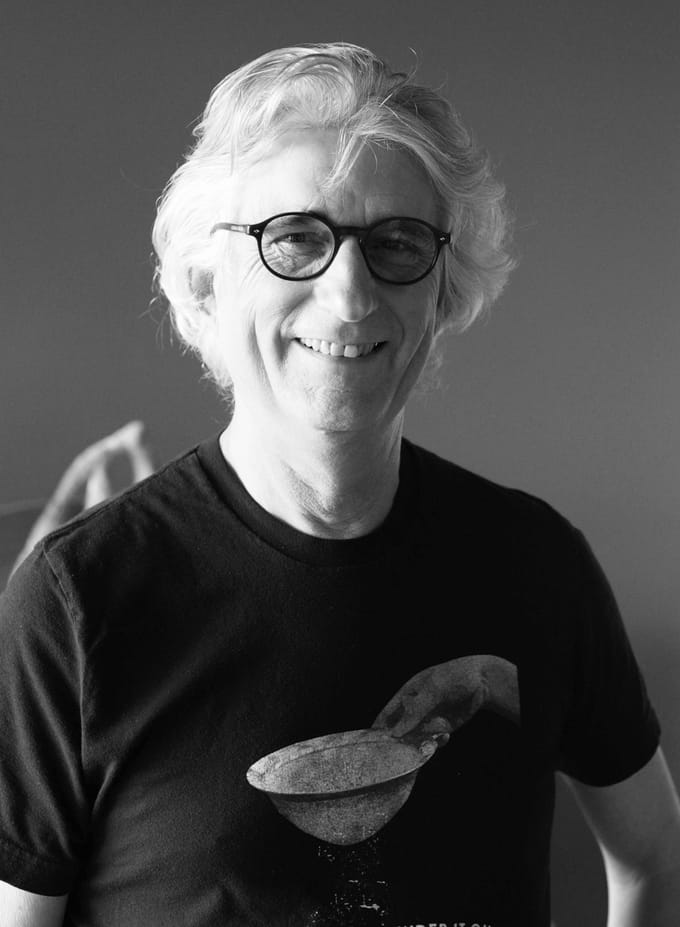
Michel Suas
Michel Suas: there are some bakers who change the industry to such an extent that you can see – or even taste – reflections of their work on bakery counters all over the world

Explaining how he came to set up the San Francisco Baking Institute, Michel says, ‘I realised there were a lot of people who were involved in the baking industry, but they didn’t have as much knowledge as they should have.’ He was inspired by the passion Californian bakers had for bread making – ‘I thought it was a good wave to catch on,’ he says – and this was enough to encourage him to stay. Having worked his way through the French apprenticeship system and baked bread for a 3-star Michelin restaurant, Manresa, Michel Suas was well trained in classic baking techniques and was ready to share his knowledge. ‘We opened the school with no sponsorship because we wanted to have the freedom to teach whatever we wanted,’ he says. One of the ideas driving the school was to give small bakeries and keen amateurs access to the help they needed, without them having to pay for one-to-one consultancy.

The SFBI is now a destination for bread-making students from all over the world. Some are wanting to set up their own bakeries, some are already working at bakeries large or small, and some are home bakers with a thirst for knowledge. The courses run at the school focus on equipping students with the theory and practical techniques they need to be able to expand their baking ideas, rather than just teaching them the formulas and processes for specific recipes.

After I’d been in the city for only short time, I realised that sourdough there is so iconic they simply call it ‘sour’. There has been much written about what makes a real San Francisco sourdough, with bakeries across the world producing their own version of the loaf. Michel explains that the really sour acidity and leathery crust, characteristic of the San Francisco sourdough, is down to the way the mother is maintained, the proofing techniques, temperatures and timing, and even the ovens used to bake the bread. ‘They use a high-protein flour, and they ferment the mother in a cool temperature,’ he says. This favours the production of acetic acid and keeps the pH low. Michel contrasts this with the approach taken in France. ‘The French usually do that [ferment the levain] at room temperature, with a little bit more water, and the flour protein is not as strong. So you have a little bit more lactic acid’, he says. He feels that in San Francisco, the focus is on using the levain to make the bread sour, whereas in French bread making, the focus is more on getting the bread to rise: ‘If you look at the two breads, one is really dense and one is a little chewier.’

Having been involved in the development of so many great bakers and bakeries, Michel has been able to watch as the artisan bread movement has changed over the years. He has seen more small retail bakeries open to cater for a growing demand for good bread, especially as younger, professional people have moved into the city. ‘The bakery used to be a place where you go in the morning, buy your bread, then go home,’ he says. ‘Now the bakery is like a club or a bar; you go there in the day and have a tartine or a sandwich and a pastry.’ Bakeries are opening with coffee shops attached and have become a place where customers can relax, socialise and enjoy something to eat. As Michel says, ‘The bakery adapts to their lives.’

Michel has also watched with interest the growing use of heritage grains. ‘At the San Francisco Baking Institute we have been working with ancient grain for many years,’ he says, ‘and now it is becoming more mainstream.’

Like me, he felt that these grains, when made into doughs that are given a long fermentation, produce breads that can be eaten without discomfort by people who have difficulties in eating bread made from regular wheat. This is something they had noticed at the Baking Institute, but had been waiting for someone with the necessary scientific backing to confirm.

Talking with Michel was an absolute pleasure. I learned so much from him in the space of a short conversation.

If San Francisco isn’t in your immediate travel plans, but you’d like to learn more about Michel’s approach to bread making, he has written a book – a very big book – called Advanced Bread and Pastry. It was created for the Baking Institute and is more of a textbook than just a baking book, but well worth reading. There are also a series of short and incredibly informative training videos, which are accessible through the website for an annual fee.

http://www.sfbi.com/


All reasonable care is taken when writing about health aspects of bread, but the information it contains is not intended to take the place of treatment by a qualified medical practitioner. You must seek professional advice if you are in any doubt about any medical condition. Any application of the ideas and information contained on this website is at the reader's sole discretion and risk.

Learn more about…

The Sourdough
School
Attend a
Sourdough Retreat
Join Proven
Bread Classes
The Sourdough
School Diploma

Never miss a post

Enter your email address


About Dr Vanessa Kimbell

Dr Vanessa Kimbell is acknowledged as one of the world’s foremost authorities on bread and human health — the first person to hold a doctorate in Baking as Lifestyle Medicine and Preventative Healthcare, and the pioneer who, long before gut health became a mainstream concern, first identified the crucial role bread plays in the gut microbiome and mental wellbeing. A fourth-generation baker of Italian descent, she has been baking sourdough since the age of 11, served her traditional apprenticeship in the Dordogne, and is a time-served, French-trained qualified baker who has worked alongside some of the world’s greatest bakers including Richard Hart and Gabriele Bonci. She has spent four decades asking the questions the food industry preferred no one asked: why was industrial mono bread slowly harming us, and what would it take to make bread that genuinely nourishes?

The answer became her life’s work. As founder and Course Director of The Sourdough School in Northamptonshire — a world-renowned centre of research and education — she has taught bakers from over 84 countries, integrated the BALM (Baking as Lifestyle Medicine) Protocol into NHS clinical practice at Bethlem Royal Hospital, and developed Proven Bread: the first bread built on clinical evidence, personalised to the individual through nutrigenetics and gut microbiome assessment. She delivered the Royal College of General Practitioners‘ approved course in the Nutrition of Bread, has been a regular contributor to BBC Radio 4’s Food Programme for many years, and collaborates with leading scientists and clinicians including Professor Tim Spector — who credits her with teaching people to make the healthiest bread in the world — and Professor David Veale. Named the Sourdough Queen by The Telegraph in 2013, her influence reaches far beyond the classroom — from artisan bakers and healthcare professionals to the world’s leading food scientists and multinational food corporations.

A bestselling international author of five books, her sixth — Proven — publishes in November 2026.

More information about Vanessa can be found at
The Sourdough School,
The Sourdough Club,
on Instagram at @SourdoughClub,
@SourdoughSchool and
@vanessakimbell,
on Facebook and
LinkedIn.

Previous Post:FROM BOOKHow to Apply for a Course & Other Questions
Next Post:New Recipe for Club Members – Sourdough Fig Rolls

Reader Interactions

Comments

  1. Joyce Schexnayder

    31 March 2021 at 1:17 am

    Hello Michel,so finally able to see you ..

    Reply

Leave a Reply Cancel reply

Your email address will not be published. Required fields are marked *


Todays live for diploma students will be on 'How t Todays live for diploma students will be on 'How to engage your patient in the lifestyle changes of the BALM' with @vanessakimbell 

In their 6pm live session, we help keep our students on track with the syllabus and discuss the application of Baking As Lifestyle Medicine to the 6 pillars of Lifestyle medicine, applying the research papers, application of the Research, and how this ties into prescribing, along with guest lecturers, discussions and sharing knowledge.

#lifestylemedicine #health #functionalmedicine #nutrition #integrativemedicine #healthylifestyle #wellness #lifestyle #rcgp #dietitian #nutritionist #healthcareprofessional #holistichealth #healthyliving #plantbased #guthealth #naturopathicmedicine #selfcare #functionalnutrition  #naturopathicdoctor #foodasmedicine #foodismedicine #lifestylegoals #cpd #lifestylechange #mentalhealth #sourdough #sourdoughschool #bakeforhealth
BAKE, ANALYSE, EAT; RECALIBRATE & REPEAT. 📆 The S BAKE, ANALYSE, EAT; RECALIBRATE & REPEAT.

📆 The Sourdough School Clinic - Thursdays 8pm - for students of The Sourdough School 

✏️ In this weekly live session, we cover technical baking questions. Students can submit their Baking Record Sheets in advance of the session.

📋 We look at the details of our student's bakes - the specifics of the flour, timings and temperatures. Using our sourdough record sheets Vanessa will make suggestions on how they might modify, or recalibrate the next time they bake.

Follow the link in the bio to learn more about becoming a student at The Sourdough School 👆

#sourdough #sourdoughschool #bread #sourdoughlove #sourdoughlover #naturalleavened #leavening #levain #realbread #breadmaking #bakebread #makebread #makerealbread #learntobakebread #breadmakingclass #sourdoughstories #bakingforlove #bakingtherapy #sourdoughbaking
IBS AWARENESS MONTH Do you suffer from irritable IBS AWARENESS MONTH

Do you suffer from irritable bowel syndrome (IBS)? It can be tough to deal with the uncomfortable symptoms of stomach cramps, constipation, diarrhoea and bloating. But did you know that making dietary changes, such as incorporating sourdough bread into your diet, could help alleviate some of those symptoms?

Studies have shown that sourdough's long, slow fermentation process can reduce IBS symptoms. Plus, during #ibsawarenessmonth, we're exploring how adding different herbs and spices to your sourdough can further improve both the flavour and the digestion of your bread.

Let's talk about gut health, fermentation, and how sourdough can be a delicious and healthy addition to your diet. Join the conversation and share your experiences with IBS and sourdough.

#guthealth #healyourgut #healthygut #guthealing #guthealthmatters #letfoodbethymedicine #foodasmedicine #gutbrainconnection #nutrientdense #micronutrients #digestivehealth #nutritionfacts #microbiome #breadandguts #ibsawarenessmonth
THE SOURDOUGH SCHOOL – HAND CARVED WOODEN LAME On THE SOURDOUGH SCHOOL – HAND CARVED WOODEN LAME

One of the biggest issues around using a plastic lame to score sourdough, of course, is that eventually the blade will become blunt and the lame could end up in landfill.  So several years ago I talked to my dear friend EJ about developing a lame with a replaceable blade. And he came up with this very beautiful hand carved wooden lame.

Very sadly EJ is no longer with us. Recently a friend of EJ’s who is also a wood turner and carver offered to make these again for us in remembrance of our dear friend.

Follow the link in the bio to our shop where you can find our full selection of wooden sourdough tools 👆

#sourdough #sourdoughschool #bread #sourdoughlove #sourdoughlover #naturalleavened #leavening #levain #realbread #breadmaking #bakebread #makebread #makerealbread #learntobakebread #breadmakingclass #sourdoughstories #bakingforlove #bakingtherapy #sourdoughbaking
The Baking As Lifestyle Medicine (BALM) Protocol The Baking As Lifestyle Medicine (BALM) Protocol

The current food system is broken at multiple levels, from the pesticides used in our soils to the emulsifiers and additives adulterating industrially-processed foods. Nowhere is this more apparent than in the bread we eat.  The figures reported by the UK Flour Millers say that bread is bought by a staggering “99.8% of British households” and that “the equivalent of nearly 11 million loaves are sold each day. Approximately 60-70% of the bread we eat is white and sandwiches are thought to account for 50% of overall bread consumption. Average bread purchases are the equivalent of 60.3 loaves per person per year.” 

Most bread sold is made by modern processing methods that strip heart-healthy whole grains of their nutrient contents, resulting in low-fibre bread with a high glycemic index. Over time, white processed bread can increase a person’s risk of insulin resistance alongside other lifestyle diseases.

We’re on a mission to revolutionise the bread making process at every level – from soil to slice. The rules governing this are laid out in our Baking As Lifestyle Medicine protocol. 

#lifestylemedicine #health #functionalmedicine #nutrition #integrativemedicine #healthylifestyle #wellness #lifestyle #rcgp #dietitian #nutritionist #healthcareprofessional #holistichealth #healthyliving #plantbased #guthealth #naturopathicmedicine #selfcare #functionalnutrition  #naturopathicdoctor #foodasmedicine #foodismedicine #lifestylegoals #cpd #lifestylechange #mentalhealth #sourdough #sourdoughschool #bakeforhealth
Follow on Instagram

About

Email: [email protected]
Tel: +44 (0)7813308301

The Sourdough School Ltd
Registered in England & Wales: 08412236

Terms & Conditions

Privacy Policy

  • Facebook
  • Instagram
  • Pinterest
  • Twitter

Latest Posts

Glyphosate in Oats: Why Organic Matters more for some than others

What is the difference between Ambient and Retarded Sourdough?

Why You Feel Better Eating Bread on Holiday (And How to Fix It at Home)

What is Sourdough? The Complete Guide to Real Sourdough Bread

The Classic Diversity Sourdough Baguettes – Ambient

BANT Member
Lifecode GX

Subscribe

Enter your email address

Search


Terms & Conditions | Competition Terms & Conditions | Privacy Policy
Copyright © 2009–2026 Vanessa Kimbell | Login
Registered in England and Wales: 08412236
Website by Callia Web