A baking couche cloth is a heavy linen or cotton cloth used to support shaped dough during final fermentation. We use the term baking couche cloth to describe both the material and its purpose in maintaining structure. Because dough relaxes as fermentation progresses, a couche helps retain height and shape before baking.
How a baking couche cloth works
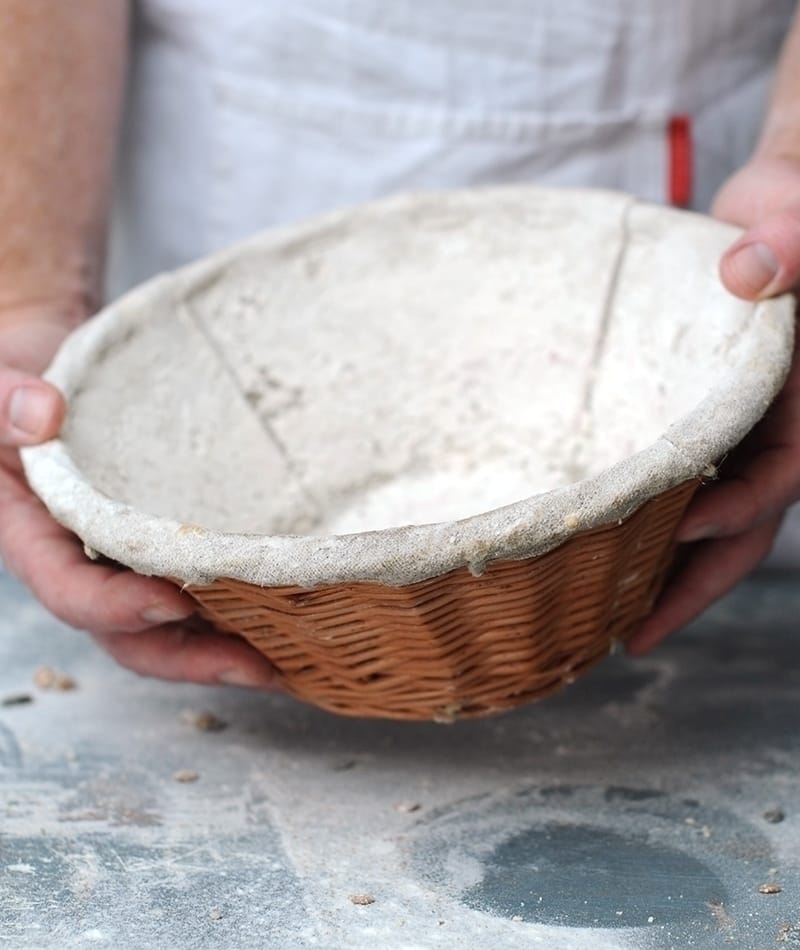
A couche is laid out on a work surface (or directly a basket/banneton) and lightly dusted with flour. Shaped dough pieces are placed between folds of cloth. As a result, each loaf is gently supported without flattening. The cloth absorbs surface moisture, allowing a slight skin to form while keeping the interior extensible. This balance improves oven spring and supports consistent scoring. You can read more about dough handling and shaping in our glossary.
Importance for fermentation and loaf structure
During fermentation, yeast and lactic acid bacteria produce gases that expand the dough. However, without support, dough can spread sideways. Using a couche limits lateral expansion, so loaves maintain tension and internal structure. This technique connects directly to hydration and bulk fermentation concepts taught in our courses, where students learn how fermentation affects crumb and digestibility.
Health and digestion relevance
Although a couche does not directly alter nutrition, it supports consistent fermentation. Steady fermentation enhances fibre breakdown and nutrient bioavailability, which can benefit the gut microbiome and promote satiety. For individuals with gluten sensitivity or IBS, predictable fermentation can improve tolerability. Therefore, technique contributes to personalised bread making that nourishes both health and wellbeing.
Practical application in teaching and baking
In practice, we dust the couche with rice flour to prevent sticking and fold it for baguettes, batards, or other shapes. This hands-on approach helps students understand dough strength through touch. In retreats and workshops and workshops, we link couche handling to shaping techniques, where consistent proofing ensures reliable fermentation and loaf structure. As students develop this understanding, they can see how professional methods translate into better digestibility and nourishment.
 Chef in Bread Baking: A Bit of Starter for the Next Dough